
If you’ve started looking at emerald cut diamonds, you’ve probably already noticed something:
They’re… different.
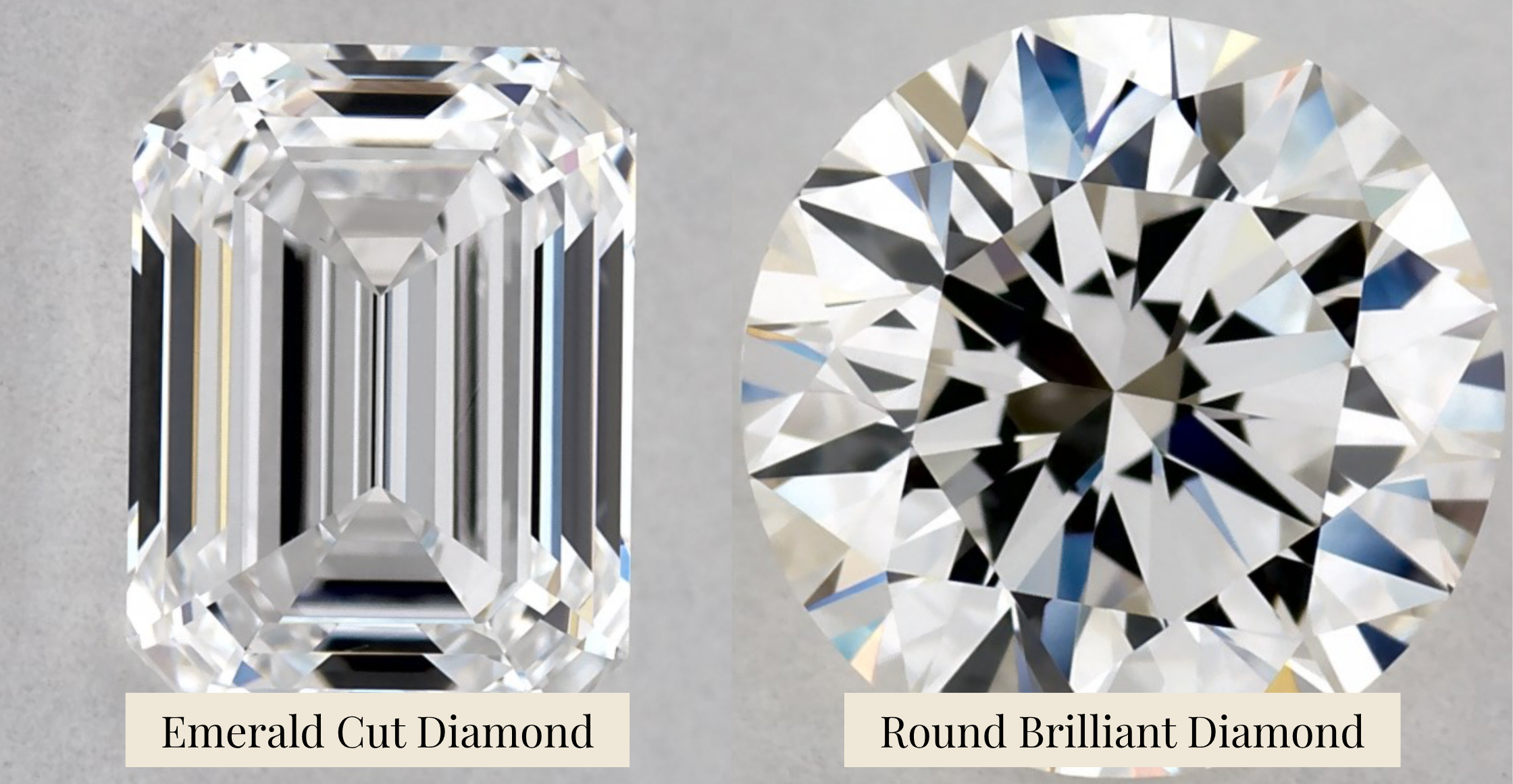
Emerald cuts (left) show broad, open facets. They’re often glassy, open, and have more of a “shine.” While round diamonds (right) are designed to maximize sparkle.
Compared to round or oval diamonds, emerald cuts don’t have that same sparkle. Instead, they have this clean, glassy look. Almost like looking into the stone rather than at it.
And that’s exactly why they’re tricky.
Because emerald cuts don’t hide anything.
Not inclusions. Not poor proportions. Not dull performance.
So while you’ll see a lot of technical advice online (percentages, tables, depth, polish grades), the reality is:
Most of that doesn’t help you actually choose a good emerald cut.
If you want to keep it simple, there are really just three things I’d pay attention to at the beginning.
1. Where the Inclusions Are
(Not Just If They Exist)
With most diamonds, you can get away with inclusions you’ll never notice.
Emerald cuts are not like that.
Because of their step-cut faceting (those long, open facets), they act more like a window into the diamond. There’s nowhere for inclusions to hide.
So instead of asking:
“Is this VS1 or VS2?”
A better question is:
“Where are the inclusions, and will I actually see them?”
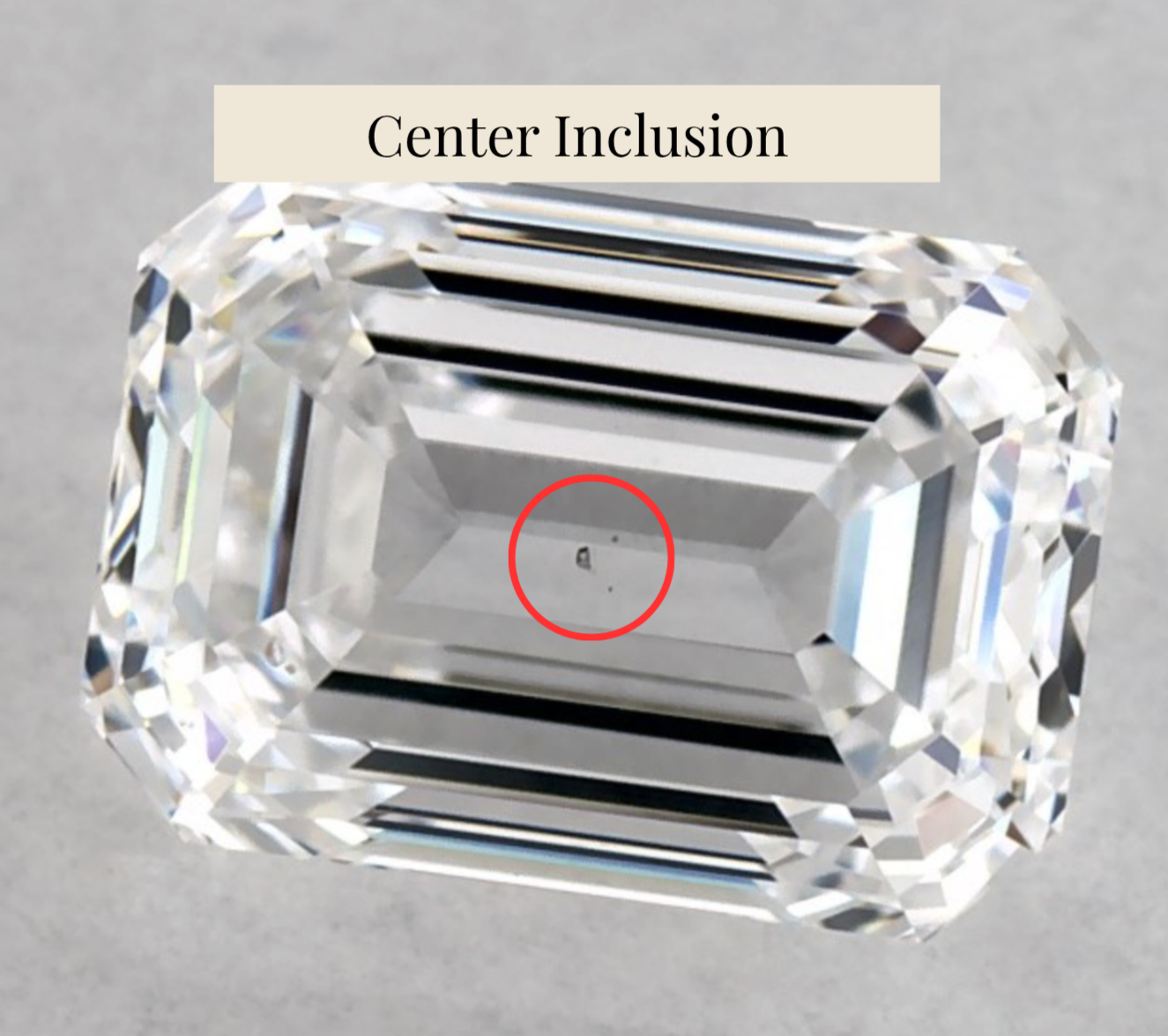
Emerald cut diamond, VS2 clarity grade
This diamond is technically within a “safe” clarity range. But the inclusion sits directly in the center, making it much more noticeable.
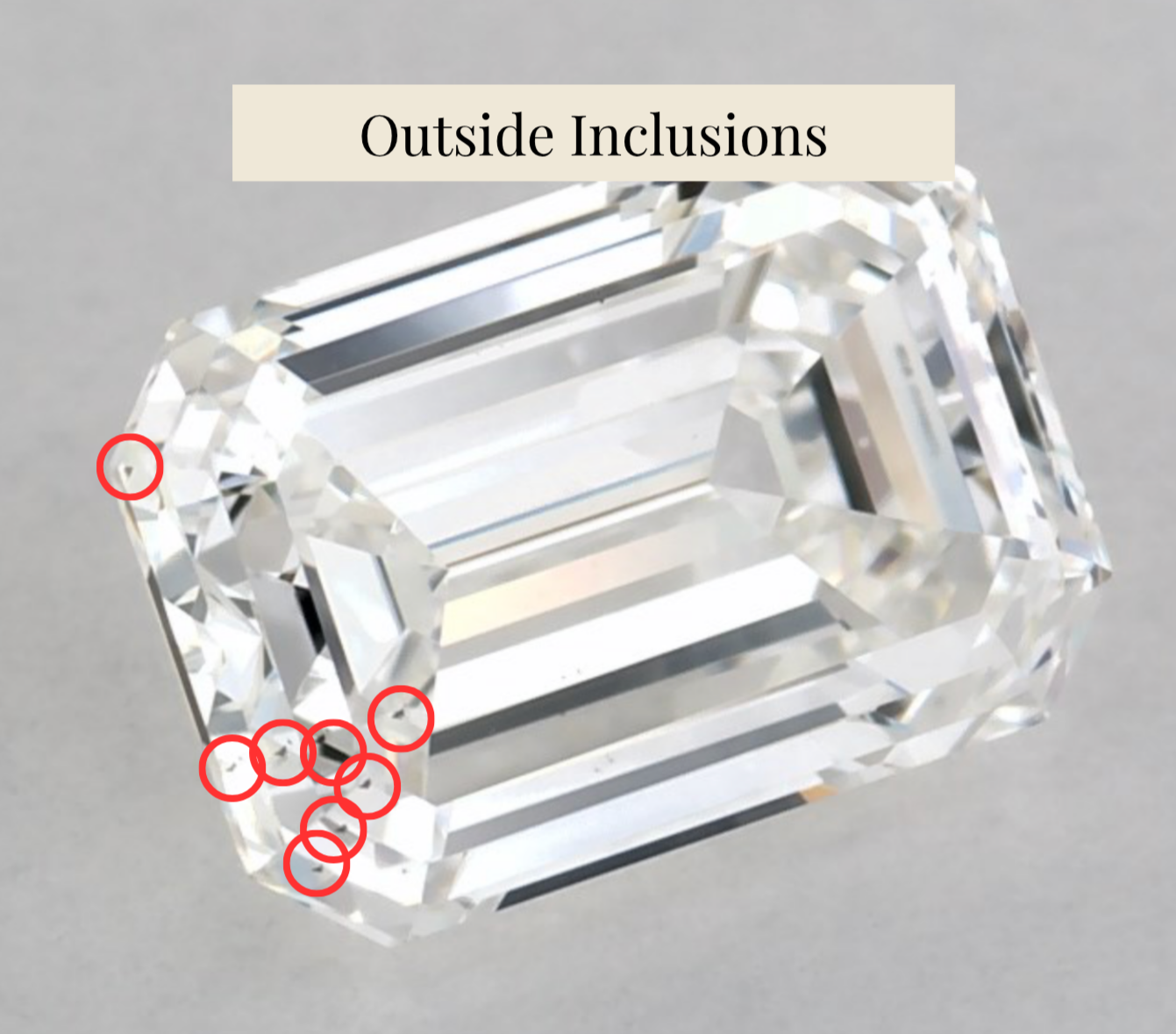
Emerald cut diamond, VS2 clarity grade
In this case, the inclusions are pushed toward the edge of the diamond, where it’s far less noticeable in normal viewing.
Two diamonds with the exact same clarity grade can look completely different depending on the placement of those inclusions.
What to watch for:
Inclusions in the center of the stone (these are the most visible)
Dark or obvious inclusions vs faint, wispy ones
Anything that interrupts that clean, “hall of mirrors” look
What’s often fine:
Inclusions closer to the edges or corners
Very light, scattered inclusions that don’t catch your eye
The goal isn’t perfection. It’s visual cleanliness.
And with emerald cuts, that’s something you have to judge with your eyes. Not just a grading report.
2. The Shape and Proportions
(Why Some Emerald Cuts Look “Off”)
Have you ever looked at two emerald cut diamonds side by side and thought:
“Why does one just look… better?”
Even if you couldn’t explain why?
That usually comes down to proportions.
You’ll often hear about length-to-width ratios (like 1.30, 1.40, etc.), and yes, that matters. But not in a rigid, technical way.
What really matters is:
Does the diamond look balanced?
Some emerald cuts look:
Too square
Too long and skinny
Or slightly “bulky” and fat
And once you see it, you can’t unsee it.
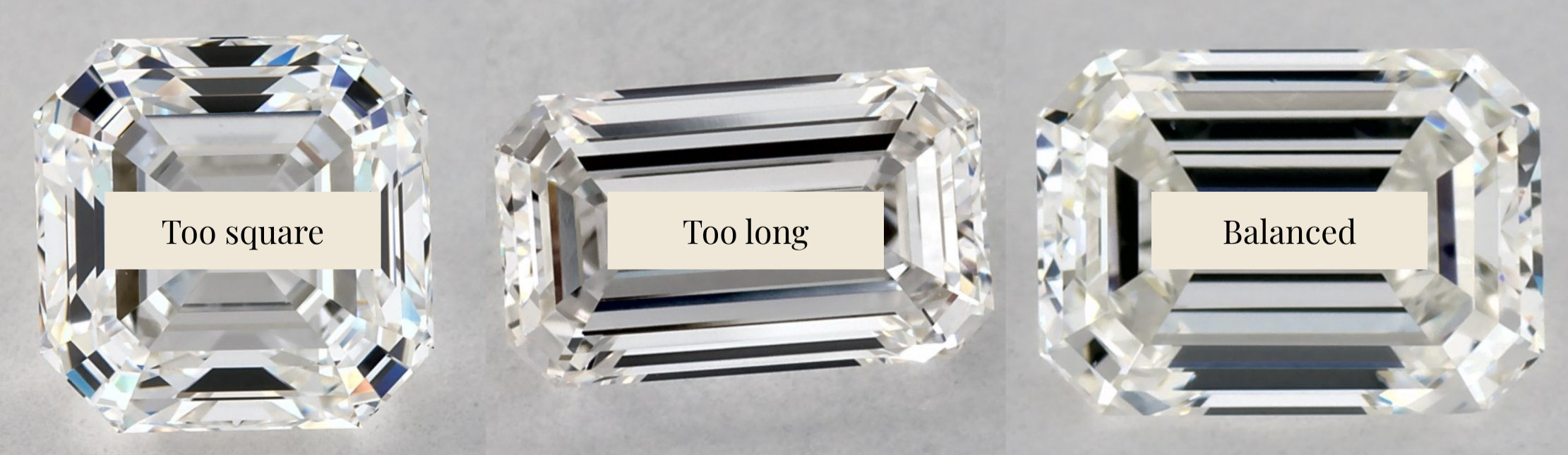
Even within emerald cuts, proportions vary widely. The difference between square, elongated, and balanced shapes is immediately noticeable once you start comparing.
As a general guideline, around 1.30-1.45 tends to be a sweet spot for many people. But personal preference plays a big role here.
More importantly:
The outline should feel clean and intentional
The corners (the “cut corners” of the emerald shape) shouldn’t look awkward or uneven
This is one of those areas where:
Your eye is often more reliable than the specs.
If something feels off, it usually is.
3. How the Diamond Actually Performs
(Liveliness vs Dullness)
This is the one that surprises people the most.
Because emerald cut diamonds don’t sparkle like brilliant cuts, people assume:
“They’re all kind of subtle anyway…”
That’s not true.
A well cut emerald still has:
Bright flashes of light
Contrast (light and dark patterning)
A sense of depth and movement
A poorly cut one?
Looks flat
Lifeless
Almost like glass instead of a diamond
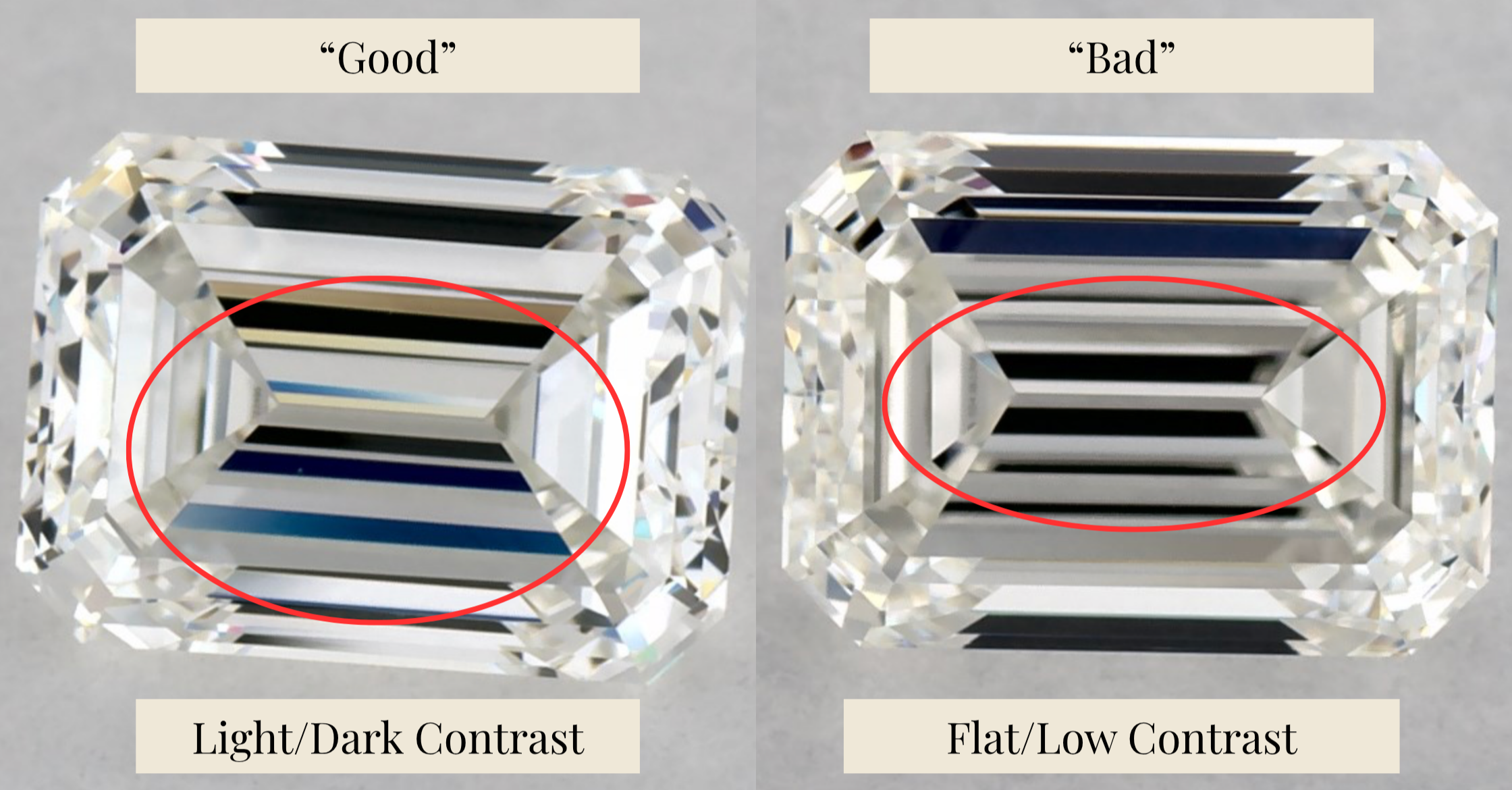
These diamonds may look similar on paper, but in real lighting one shows contrast and depth, while the other appears flat and lifeless.
The tricky part is that this isn’t captured well by numbers on a certificate.
So what should you look for?
Does the diamond look bright across the whole surface, or are there dead areas?
Do you see contrast (that “hall of mirrors” effect), or is it just washed out?
Does it still look good in normal lighting, not just under jewellery store spotlights?
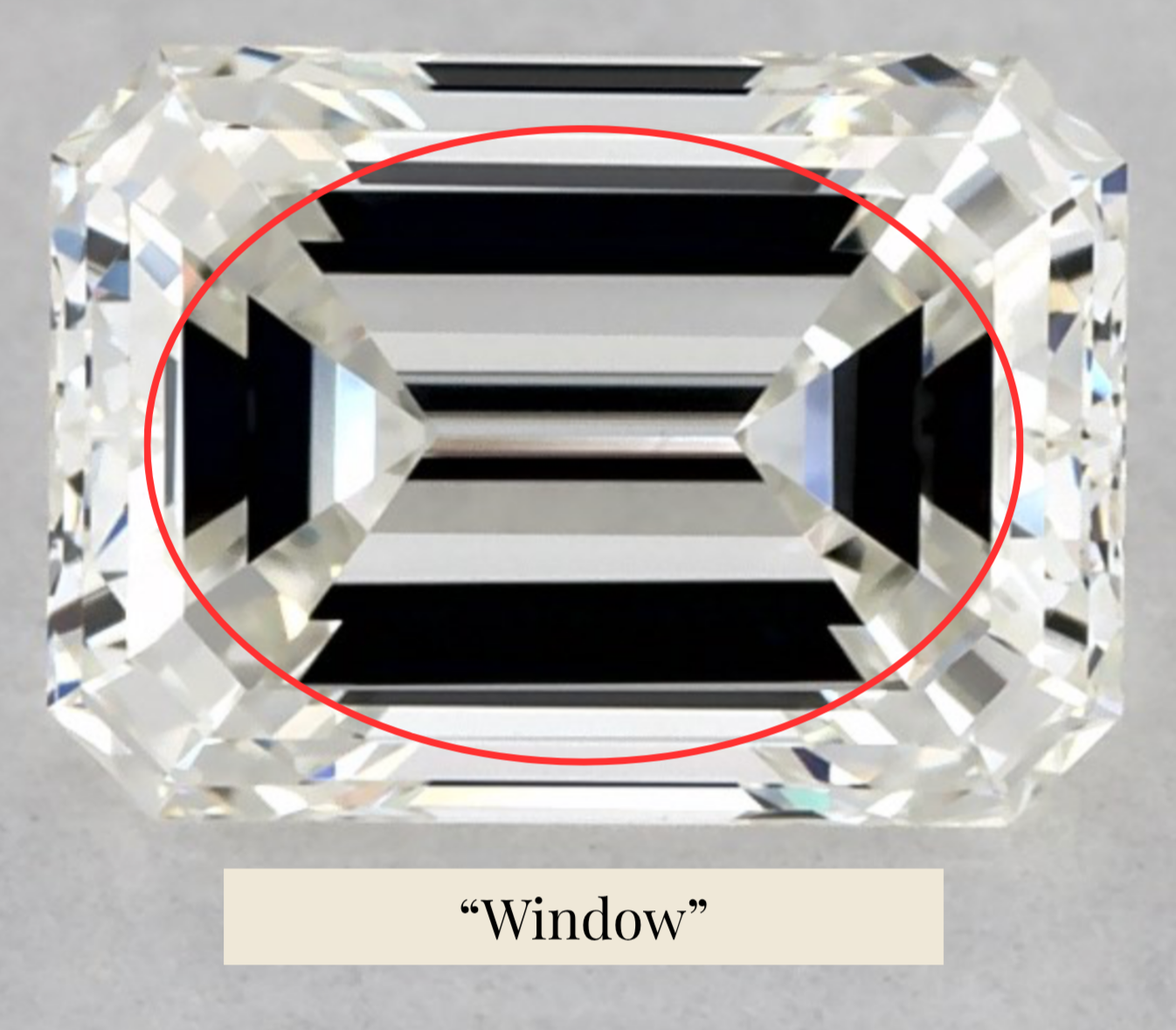
Notice how the center of this emerald cut appears glassy, empty, and dark? This is often what people describe as “lifeless.”
If you can, always look at:
Videos (not just photos)
Different lighting conditions
Because this is where emerald cuts really separate the good from the mediocre.
Why Emerald Cuts Feel Harder to Choose
If you’re feeling unsure at this point, you’re not alone.
Emerald cut diamonds remove a lot of the “forgiveness” that other shapes have.
With a round diamond, you can often rely on:
Cut grades
Standard proportions
Predictable performance
With emerald cuts:
There’s more nuance
More variation
And more reliance on your own judgement
That’s why you’ll see so many over technical explanations online. They’re trying to create certainty where there isn’t a simple formula.
A Simpler Way to Approach It
Instead of trying to evaluate everything all at once, narrow your focus:
Is it eye clean? (Based on inclusion placement)
Does the shape look balanced to you?
Does it feel lively, not dull?
If a diamond checks those three boxes, you’re already in a very strong position.
From there, you can refine based on size, budget, and colour preferences. But those three things will do most of the heavy lifting.
Final Thought
Emerald cuts aren’t about maximum sparkle.
They’re about:
Clean lines
Transparency
Subtle, elegant light performance
And because of that, they reward careful selection more than almost any other diamond shape.
If you focus on:
Where inclusions actually show
Whether the shape feels right
And how the diamond performs in real life
You’ll avoid most of the common mistakes people make.
Emerald cuts don’t hide anything, so neither should your questions.
Grab the free guide: 5 things to ask before you buy, so you know exactly what to check before committing to a shape that shows everything.
And if you’ve found a diamond you’re considering and want an expert opinion before you buy:
About the Author
Robyn Bell-Wong is a Calgary-based Independent Jewellery Advisor and Consultant specializing in engagement rings, diamonds, and meaningful fine jewellery purchases.
With over 20 years of experience in service, 5 years at the top of a fine jewellery house, 300+ clients guided, and a GIA Applied Jewelry Professional designation, she provides private, buyer-side guidance to clients making high value jewellery decisions across Canada and the U.S.
Unlike traditional jewellery retail environments, Robyn does not sell jewellery or work on commission. Her role is to act solely in her client’s best interest. Offering clear, objective guidance on quality, value, and design so clients can make confident, well-informed decisions.
Through Refined by Robyn, she supports clients with engagement ring guidance, independent ring reviews, and private jewellery consulting for meaningful purchases.
Her work focuses on helping clients avoid costly mistakes, navigate overwhelming options, and choose jewellery that truly reflects their intention, style, and budget.
Request a private consultation
Follow on Instagram @refined.by.robyn