
This $30,000 Diamond Looked Perfect. Here’s Why I Told My Client to Walk Away

On paper, this diamond looked like an easy yes.
It was a 2.00ct natural oval.
E colour.
Strong clarity.
Right around the $30,000 mark.
Exactly what my client thought he was looking for.
And at first glance, it looked like a great deal. Especially for a colourless diamond in that size.
But after reviewing it, I told him not to buy it.
The Situation
He had a clear goal:
A 2.00ct natural oval, in the colourless range, that felt like a strong, confident choice.
He had already done some research.
He knew the specs he wanted.
And when he found this one, it looked like it checked every box.
This is usually the point where people move forward.
Why It Looked Like a Good Deal
On paper, there was nothing obviously wrong with it.
2.00ct
E colour
High clarity
Priced slightly below similar diamonds in that category
It felt like he had found something smart…
a way to get into a higher colour grade without stretching the budget further.
And this is exactly how a lot of these decisions happen.
Everything looks “right.”
The numbers make sense.
The price feels justified.
What I Saw (That Changed Everything)
The issue wasn’t obvious from the certificate.
It was in how the diamond actually performed.
The proportions were off. Subtly, but enough to affect performance.
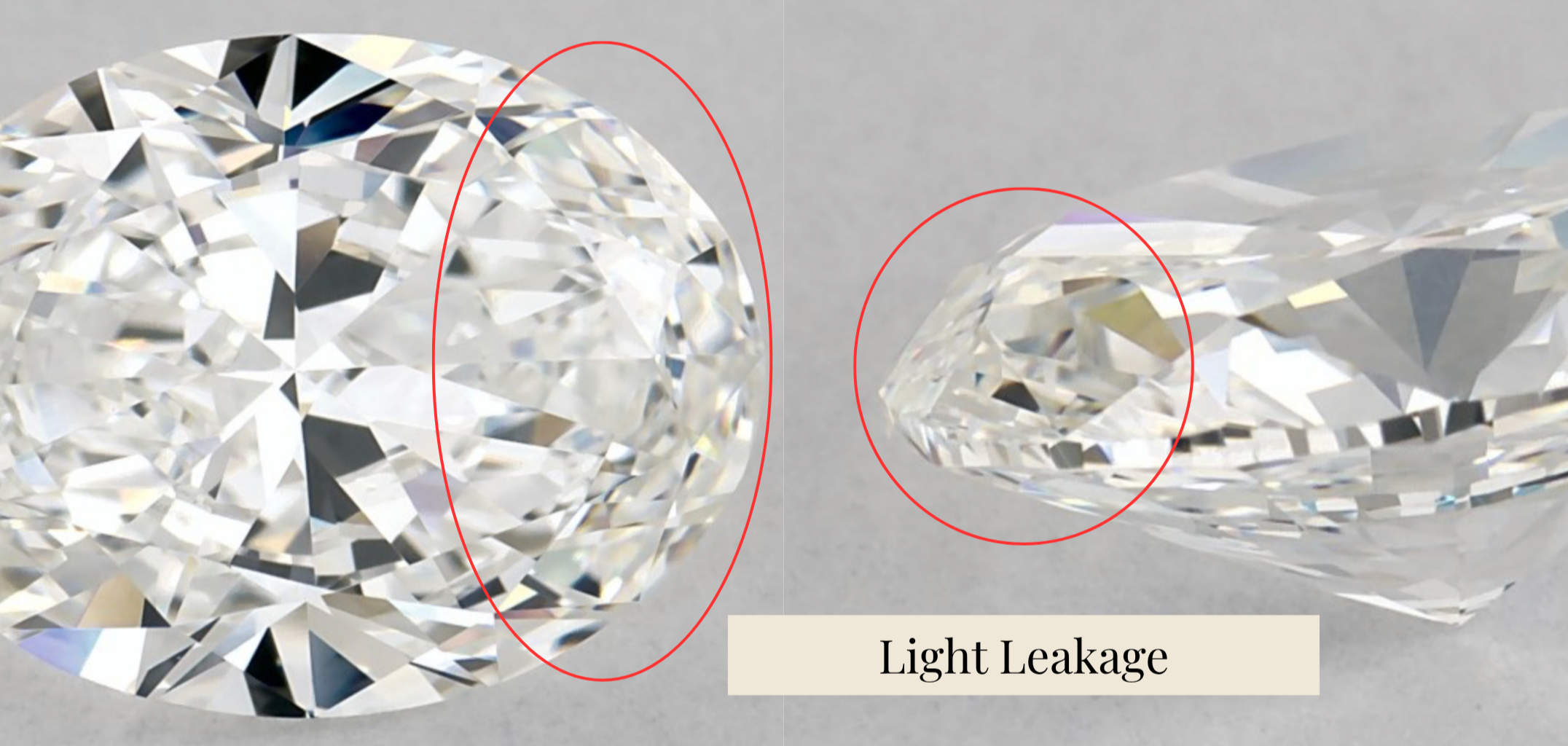
Light leakage reduces brightness and sparkle.
Instead of returning light, the diamond was leaking it.
Which meant:
Less brightness
Less sparkle
And a noticeably darker appearance, especially on one side
For an oval, this is where problems tend to show up the most.
And once you see it, it’s hard to ignore.
The Part Most People Would Miss
On paper, none of this stood out.
The grading report didn’t flag it.
The specs still looked strong.
And unless you know what to look for, it’s easy to assume everything is fine.
This is where a lot of people get caught.
Because the diamond isn’t “bad.”
It just doesn’t perform the way you’d expect for the price.
Why I Told Him to Walk Away
He could have bought it.
It wasn’t a terrible diamond.
And to most people, it would have seemed like a solid choice.
But it wasn’t worth what he was paying for it.
He was paying for:
Size
Colour
And the idea of a “good deal”
But not for how the diamond actually looked.
And that’s where the disconnect was.
What We Did Instead
We took a step back and focused on performance first.
Not just specs.
It took some sourcing, but we found another 2.00ct oval that performed better:
It handled light significantly better
It looked brighter and more lively in motion
And, it actually stood out when viewed side-by-side
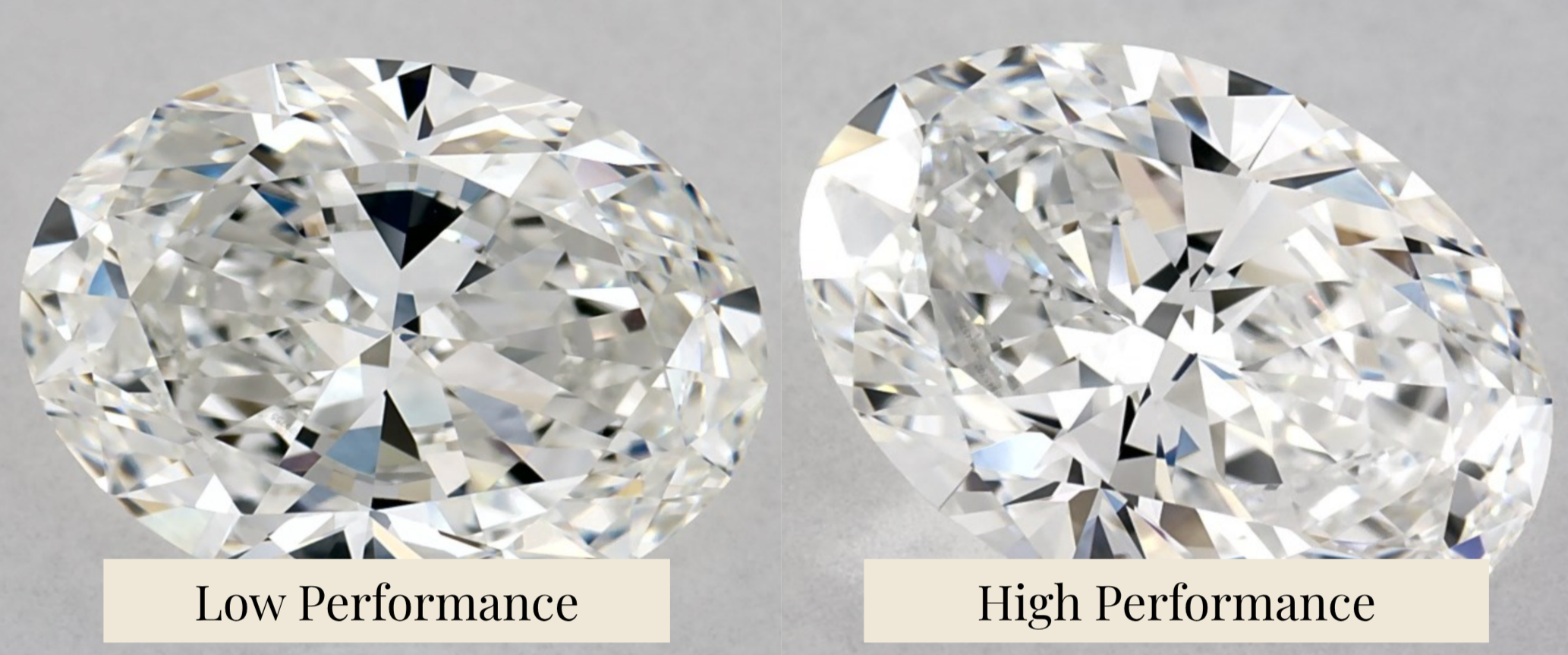
Similar specs. Very different performance.
It wasn’t about finding something “perfect.”
It was about finding something that felt right when you looked at it.
He moved forward with that one.
What You Can Take From This
A diamond can look like a great deal, and still not be the right choice.
Price doesn’t always reflect performance.
“Good value” doesn’t always mean good diamond.
And an unusually lower price is usually a pretty big red flag.
If you’re focusing only on specs, it’s very easy to miss what actually matters.
This is the part most people never see when they’re buying on their own.
What This Really Comes Down To
A lot of people think the challenge is finding a diamond.
But in reality, the challenge is:
Knowing whether the diamond you’re looking at is actually worth it.
Because once you’re comparing similar specs, the differences stop being obvious on paper.
They become visual. Subtle. Easy to miss if you’re not looking at it every day.
That’s usually where people either:
overpay for something that looks “fine”
or miss something significantly better that was available at the same budget
A More Informed Way to Approach It
This is why some people step back from trying to figure it all out alone.
Not because it’s impossible to choose a diamond on your own.
But because the cost of getting it slightly wrong is very high.
That’s where a more guided approach can help.
Instead of just looking at individual diamonds, we look at:
How they actually perform
How they compare side by side
And what you’re really getting for your budget
Engagement Ring Guidance
If you’re at the stage where you’re trying to make sense of options, or you’re not sure whether something is actually a good decision, Engagement Ring Guidance helps you step through it properly before you commit.
It’s not about reviewing a single diamond.
It’s about sourcing better options, comparing what actually matters, and making sure you’re confident in the final choice before you buy.
Want a second opinion before you commit to a specific stone?
Grab the free guide: 5 things to ask before you buy.
Or if you already have a diamond picked out, skip ahead and get it reviewed directly.
About the Author
Robyn Bell-Wong is a Calgary-based Independent Jewellery Advisor and Consultant specializing in engagement rings, diamonds, and meaningful fine jewellery purchases.
With over 20 years of experience in service, 5 years at the top of a fine jewellery house, 300+ clients guided, and a GIA Applied Jewelry Professional designation, she provides private, buyer-side guidance to clients making high value jewellery decisions across Canada and the U.S.
Unlike traditional jewellery retail environments, Robyn does not sell jewellery or work on commission. Her role is to act solely in her client’s best interest. Offering clear, objective guidance on quality, value, and design so clients can make confident, well-informed decisions.
Through Refined by Robyn, she supports clients with engagement ring guidance, independent ring reviews, and private jewellery consulting for meaningful purchases.
Her work focuses on helping clients avoid costly mistakes, navigate overwhelming options, and choose jewellery that truly reflects their intention, style, and budget.
Request a private consultation
Follow on Instagram @refined.by.robyn