
Most people wouldn’t buy a home without someone representing their interests.
But when it comes to engagement rings, that’s exactly what happens every day.
Someone walks into a jewellery store knowing this is one of the most important purchases they’ll ever make.
And the only guidance you receive usually comes from the person trying to sell it to you.
Not because jewellers are bad people.
But because the industry is built around selling jewellery, not independently guiding buyers.
That distinction matters more than most people realize.
Because buying an engagement ring is not as straightforward as people expect.
And the problem is, most people don’t realize that until they’re already overwhelmed.
Is independent advice worth it when buying an engagement ring?
Yes.
Most people buy an engagement ring only once, yet they’re expected to evaluate diamonds, pricing, craftsmanship, and design without prior experience.
Independent guidance helps reduce costly mistakes, hidden compromises, and regret by giving buyers someone focused entirely on their best interests.
Why So Many People Feel Overwhelmed Buying an Engagement Ring
People often assume engagement ring shopping should be relatively simple.
Do some research.
Learn the basics.
Compare prices.
Pick the best option.
But that’s rarely how it actually feels once you start.
Instead, most people quickly find themselves buried in:
Diamond specs
Online opinions
Conflicting advice
Reddit threads
TikToks
YouTube videos
Pinterest inspiration
AI recommendations
Sales pitches
And somehow, after all of that research, you feel less confident instead of more.
Not because you’re not intelligent.
Because this is genuinely a difficult purchase to evaluate properly.
Most people have never bought a diamond before.
You’re trying to make a high emotion, high cost decision in an industry you don’t understand, while being expected to somehow know which details matter and which ones don’t.
That’s an enormous amount of pressure.
Why does engagement ring shopping feel so stressful?
Most people feel stressed buying an engagement ring because they’re trying to avoid making an expensive mistake in an industry they have little experience navigating.
The stress usually comes from uncertainty, not lack of effort.
The Problem With Relying Entirely on Sales Advice
This is the part most people don’t think about.
When you walk into a jewellery store, the advice you receive is connected to selling something.
That doesn’t automatically make it dishonest.
But it does create natural bias.
Every store has:
Inventory priorities
vendor relationships
sales goals
product preferences
different pricing structures
So even well intentioned advice is often shaped by what that business sells or specializes in.
And most buyers don’t recognize that dynamic while they’re in it.
It’s similar to buying a home and using only the seller’s realtor.
You may still get useful information.
But the person guiding you is not exclusively representing your side of the decision.
That’s a very different experience than having someone focused entirely on helping YOU make the best choice for your situation.
The Biggest Mistakes I See When People Try to Navigate This Alone
This is where things start to go sideways.
Not because people are careless.
But because they’re trying to use information to replace experience.
Focusing Too Heavily on Diamond Specs
This is one of the most common mistakes I see.
People become fixated on things like:
VVS clarity
Colourless grading
Triple excellent certificates
And they chase those grades at the expense of what actually matters visually.
A diamond can look incredible without being flawless on paper.
(This is exactly why I wrote Is This a Good Diamond? How to Actually Tell)
And two diamonds with similar grades can look dramatically different in real life.
But because buyers are trying to reduce risk, they often gravitate toward “safe sounding” specs instead of understanding how the diamond actually performs.
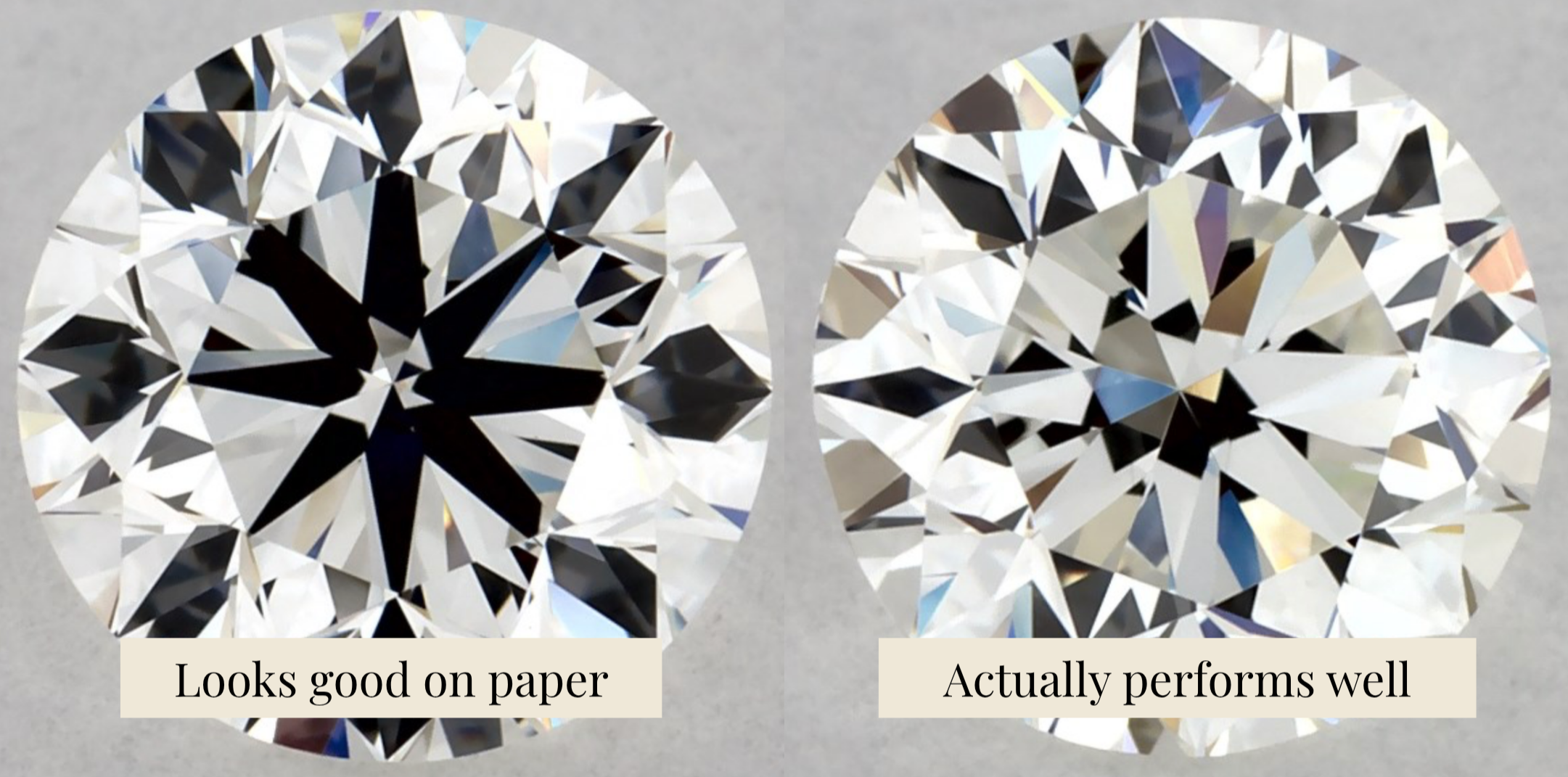
Similar grades don’t always mean similar beauty.
Mistaking Low Price For Good Value
A lower price doesn’t automatically mean a better deal.
I’ve seen people feel confident because they negotiated a diamond down to a certain number, only to realize later they accepted major compromises they didn’t understand at the time.
Poor proportions.
Structural concerns.
Transparency issues.
Weak light performance.
It wasn’t really negotiation.
It was trading quality for the feeling of control.
Trusting Certificates and Tools Too Much
Certificates matter. Tools like ASET can be useful.
But they should never be the ONLY reason a diamond is chosen.
These tools help organize information.
They don’t replace trained interpretation or real world visual evaluation.
This is one of the biggest misconceptions created by online diamond education.
People start believing that if the numbers look correct, the decision itself must also be correct.
But diamonds don’t exist cleanly on paper.
Prioritizing Pinterest Over Structural Reality
This happens constantly with engagement ring settings.
Someone falls in love with a very delicate design online and wants it recreated exactly as shown.
But what looks beautiful in a photo is not always structurally sound for everyday wear.
Thin bands.
Weak prongs.
Poor support.
Fragile hidden details.
Then months later:
The ring bends
A diamond falls out
Prongs wear prematurely
The ring needs major repair work
A big part of expert guidance is knowing when to protect someone from a decision they may regret later.

Beautiful and durable should work together.
Why do people still make expensive engagement ring mistakes after doing research?
Because information alone is not the same as interpretation.
Most buyers aren’t struggling because they didn’t research enough.
They’re struggling because they don’t yet know how to evaluate tradeoffs, priorities, and long term implications the way an experienced industry professional would.
The Difference Independent Guidance Makes
One of the biggest things I notice when working with clients is how quickly the emotional tone changes.
At the beginning, most people are:
Stressed
Distrustful
Conflicted
Exhausted
Completely overwhelmed
You can feel the anxiety radiating off of them.
They’re trying so hard to make the “right” decision.
Then something shifts.
Usually after they realize they no longer have to carry the entire process alone.
I can’t count how many times I’ve physically heard the sigh of relief.
Because suddenly:
They understand what matters.
They understand the tradeoffs.
They understand what’s actually worth prioritizing.
And most importantly:
They finally feel supported instead of sold to.
That’s when the process becomes exciting again.
Instead of obsessing over specs and second guessing every decision, we start talking about proposal plans, timelines, and what’s actually meaningful to them.
That emotional shift is huge.
What Independent Advice Actually Means
This is important to clarify because a lot of businesses position themselves as “educational.”
Independent guidance means the advice is not tied to:
Store inventory
Sales quotas
Commission
Specific brands
Specific suppliers
My role is not to convince someone to spend more.
In fact, sometimes my advice is the opposite.
I’ve recommended:
Going smaller
Making structural changes to rings
Avoiding certain purchases entirely
Even sourcing outside the local market when it made the most sense for the client
Because real guidance isn’t about selling a product.
It’s about helping someone make the best decision for THEM.
And sometimes knowing what NOT to recommend is just as important as knowing what to recommend.
Why I Built My Business This Way
I love jewellery. I really do.
I’ve been incredibly fortunate to be part of hundreds of engagement ring stories over the years.
But over time, I kept seeing the same problem repeat itself.
People were overwhelmed.
Misinformation was everywhere.
Buyers were trying to navigate an incredibly nuanced industry alone.
And no one was truly sitting on their side of the table.
Everything came with some level of bias attached to it.
And eventually I realized:
If people needed an honest industry advocate, why couldn’t that be me?
Someone who genuinely cares about clients.
Someone who understands the jewellery industry intimately.
Someone whose only goal is helping people feel confident in their decision.
That’s why this business exists.
Not to pressure people into buying jewellery.
But to help them navigate one of the most emotional purchases they’ll ever make with clarity, confidence, and support.
You’re Not Supposed to Know Everything
This is the part I wish more people understood.
You’re not failing because this feels confusing.
You’re not behind because you don’t immediately understand diamond grading, light performance, ring construction, or pricing structures.
Most people only do this once.
Of course it feels overwhelming.
The problem isn’t that you need more information.
The problem is usually that you need someone who knows how to interpret it.
Before You Buy, Get Someone On Your Side
Whether you buy locally, online, custom, lab grown, or natural, one thing matters more than almost anything else:
Making sure you actually understand the decision you’re making.
Because confidence doesn’t come from memorizing specs.
It comes from clarity.
If you’re currently researching engagement rings and want an expert opinion before making a decision, explore Engagement Ring Guidance or request a private consultation.
Sometimes the smartest thing you can do isn’t finding the “perfect” diamond.
It’s making sure you’re not navigating the process alone.
Want someone in your corner before you walk into a store?
Grab the free guide: 5 things to ask before you buy, so the only advice you’re getting isn’t coming from someone with a sales quota.
About the Author
Robyn Bell-Wong is a Calgary-based Independent Jewellery Advisor and Consultant specializing in engagement rings, diamonds, and meaningful fine jewellery purchases.
With over 20 years of experience in service, 5 years at the top of a fine jewellery house, 300+ clients guided, and a GIA Applied Jewelry Professional designation, she provides private, buyer-side guidance to clients making high value jewellery decisions across Canada and the U.S.
Unlike traditional jewellery retail environments, Robyn does not sell jewellery or work on commission. Her role is to act solely in her client’s best interest. Offering clear, objective guidance on quality, value, and design so clients can make confident, well-informed decisions.
Through Refined by Robyn, she supports clients with engagement ring guidance, independent ring reviews, and private jewellery consulting for meaningful purchases.
Her work focuses on helping clients avoid costly mistakes, navigate overwhelming options, and choose jewellery that truly reflects their intention, style, and budget.
Request a private consultation
Follow on Instagram @refined.by.robyn