
Why Diamonds Look Different in Real Life vs Online
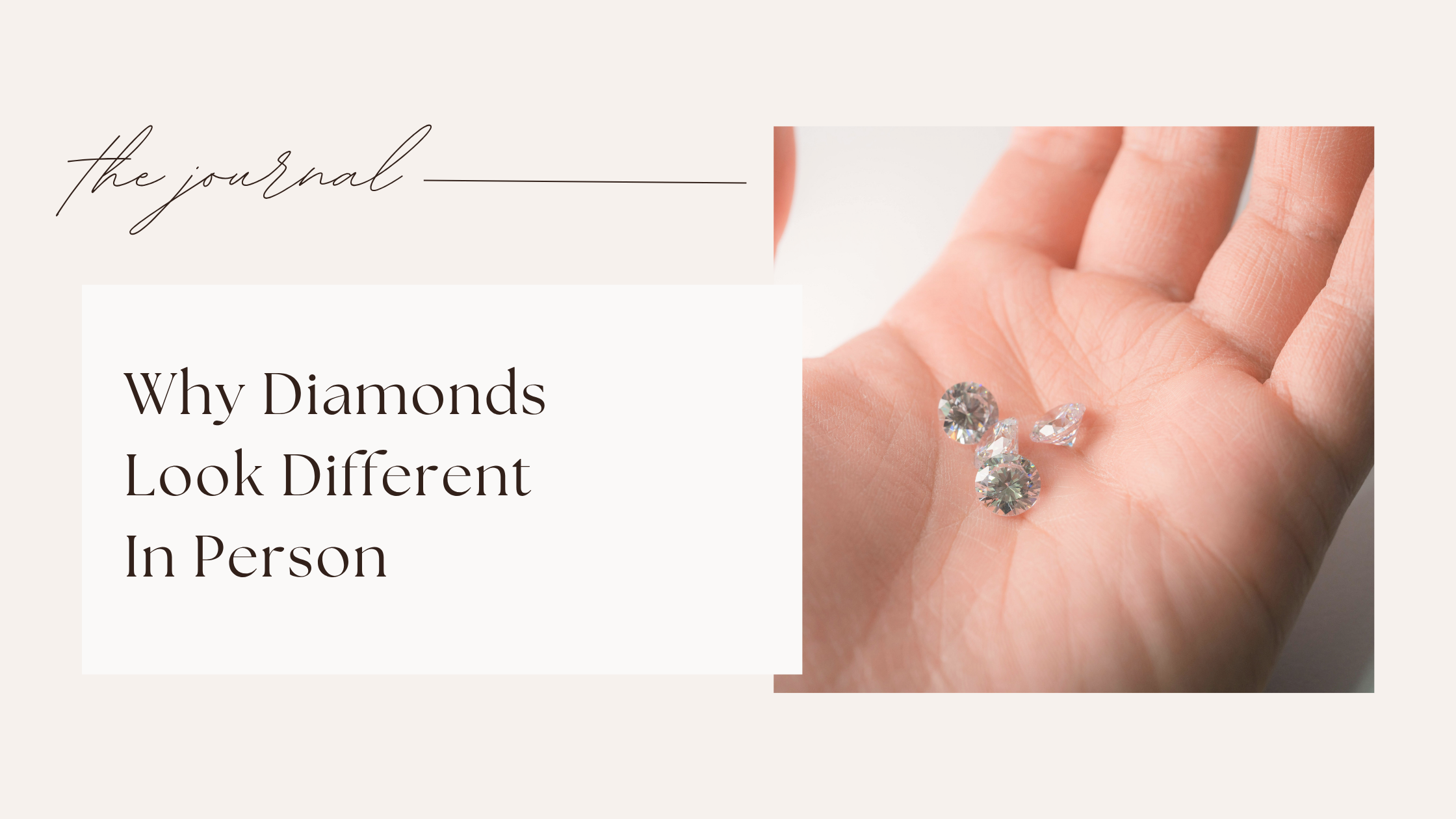
What you see online is not a different picture.
It’s a controlled version of reality.
At first glance, online diamond videos and photos feel helpful.
You can:
Zoom in.
Rotate it.
Compare options instantly.
See clarity and sparkle up close.
It feels like you’re getting more information, and more options, than you ever could in a store.
But when you see the same diamond in person…
it doesn’t quite match what you were expecting.
Sometime it’s smaller than you thought it would be.
Sometimes it’s less “perfect” than the video suggested.
And sometimes… if it’s a really good diamond… it’s even better than you anticipated.
That gap between expectation and reality isn’t random.
It’s predictable.
And once you understand why it happens, the entire online diamond buying process will start to make more sense.
Why do diamonds look different online vs in real life?
Diamonds look different online vs in real life because online images and videos are taken under controlled light, extremely close up, and optimized for angles that highlight the best features.
In person you see diamonds with natural movement, changing light, and real world scale, which alters your perception of size, sparkle, and clarity.
The Three Biggest Perception Gaps
There are three consistent places where expectations and reality shift.
Not because something’s wrong with the diamond, but because perception behaves differently online.
What are the main differences between online and in person diamond viewing?
The main differences are scale perception, how inclusions look under changing light, and how sparkle behaves in motion. Online viewing isolates and enhances these traits, while in person viewing shows how the diamond performs dynamically in everyday conditions.
Gap #1: Size Perception Is Distorted Online
One of the most common reactions I hear is:
“Oh… I thought it would be bigger.”
This isn’t misrepresentation. It’s perception engineering through presentation.
Let’s say you’re looking at a 1.00ct round brilliant diamond. In person that stone is around 6.5mm in diameter.
Online, that 6.5mm stone is:
Filling the frame
Zoomed in
Isolated
So your brain loses reference points for its actual size.
There’s no finger context.
No surrounding environment.
No distance based perception.
The diamond feels larger than it is in reality.
Then in person, your eye immediately recalibrates:
Hand size
Finger proportions
Real world distance
And that shift can feel surprising.
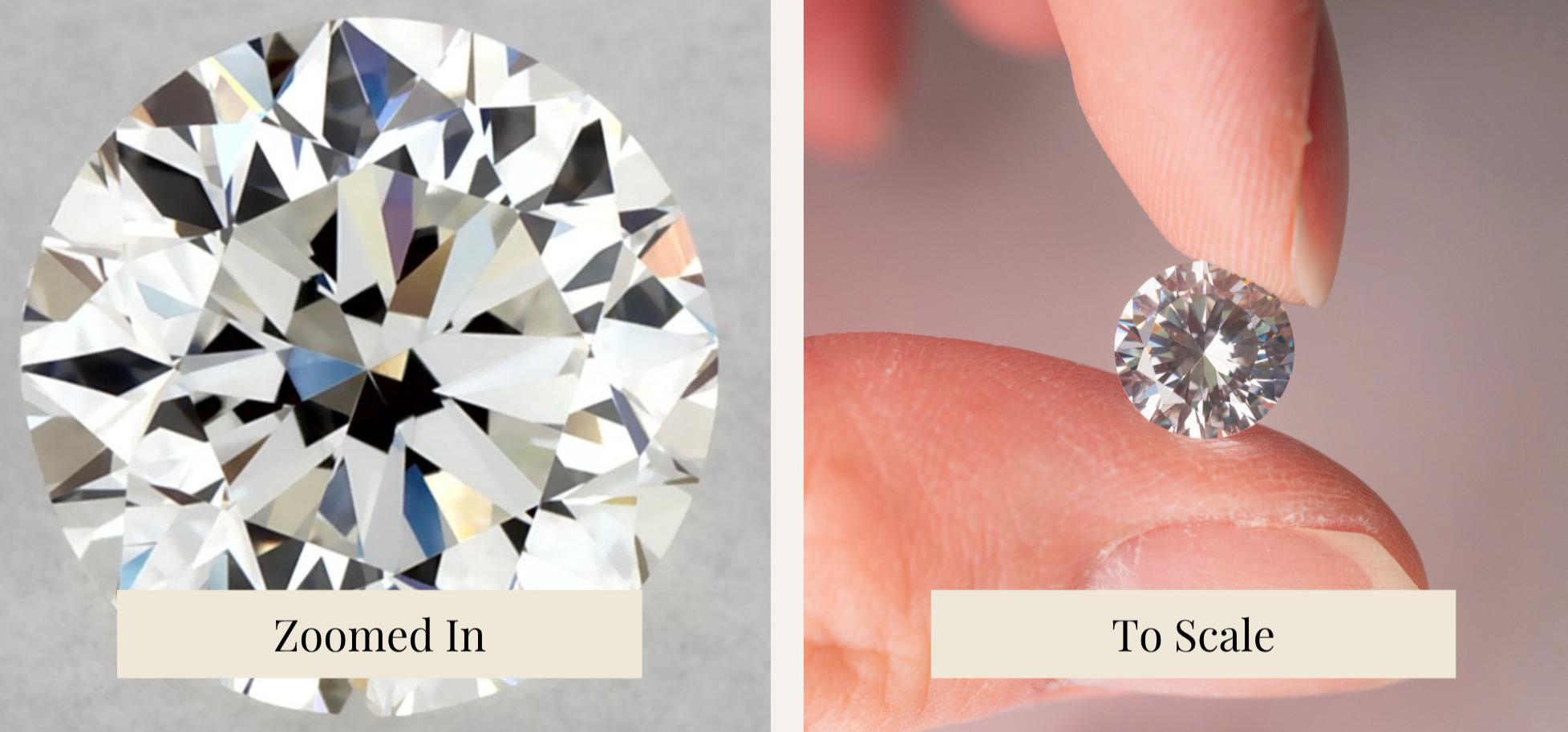
Online scale removes real world reference points.
Why do diamonds look bigger online than in person?
Diamonds often look larger online because they’re shown in close up, isolated framing without reference points like a hand or surrounding environment. This removes scale cues, making the diamond appear larger than it will look in real life.
Gap #2: Disappearing Inclusions Magically Appear In Person
Another common moment I hear:
“I don’t remember seeing that in the video…”
This happens because inclusions can behave differently depending on:
the angle
magnification
lighting direction
contrast conditions
When you’re looking at a diamond online, you’re seeing it presented as a “best visibility scenario.”
But in real life, the diamond’s not controlled.
It moves.
You move.
Lighting changes.
So inclusions can become more noticeable than expected, or less relevant than feared.
The key point is:
Online viewing doesn’t reflect how a diamond’s inclusions behave dynamically.
It reflects how they appear in a controlled environment.
Want to know if a diamond you’re looking at is actually a good diamond?
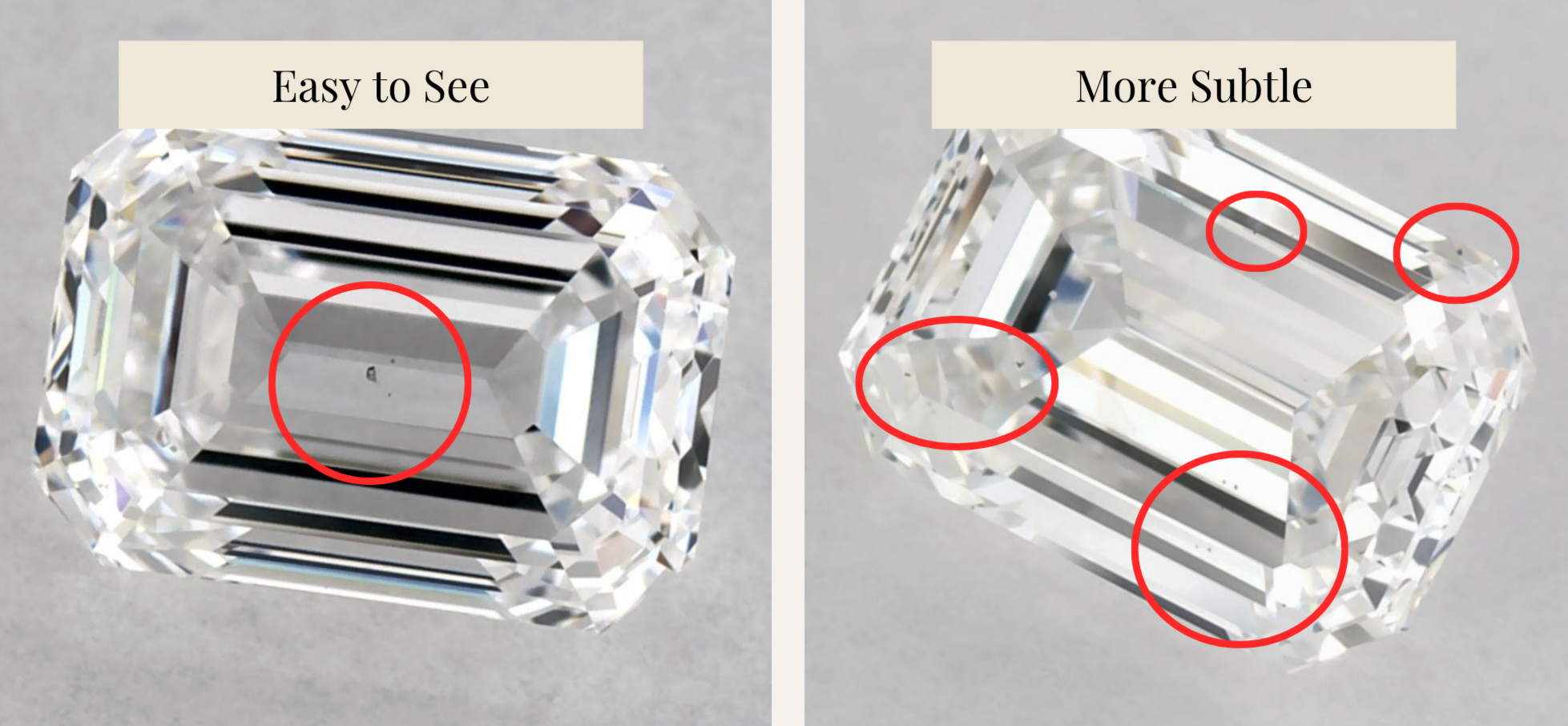
Inclusions behave differently under motion and lighting.
Why do inclusions look different online compared to in person?
Diamond inclusions appear differently online because lighting, angle, and magnification can either hide or exaggerate them.
In real life, diamonds are viewed in motion and under varied lighting, which changes how visible inclusions are compared to controlled online images.
Gap #3: Sparkle Expectations Are The Most Emotionally Misleading Gap
This is the biggest one.
When a diamond performs well online, people expect:
“This is going to be insane in real life.”
And sometimes it is.
You get that moment of: Wow! That’s actually incredible.
But sometimes the reaction is more subdued.
“It’s nice… but not what I expected.”
The difference usually comes down to how sparkle is framed online.
Most diamond videos:
Capture ideal angles
Use controlled lighting
Isolate brilliance without distraction
Highlight peak performance moments
So the diamond appears in a constant best case scenario.
In real life, sparkle is more variable.
It comes and goes with movement.
It depends a lot on the environment.
It’s less constant and more dynamic.
So expectation and reality are different, which creates even more confusion.
Sparkle is dynamic, not constant.
Why does a diamond look less sparkly in person compared to online videos?
Diamonds can appear more sparkly online because videos are filmed under controlled lighting designed to maximize brilliance and fire.
In real life, sparkle is dynamic and depends on movement, lighting conditions, and viewing distance, so it appears more varied rather than constantly enhanced.
Why Does This Perception Gap Exist?
Diamonds have a perception gap because they’re presented as a decision tool online. Not simply “lighting differences.”
Online platforms are designed to:
Help you compare quickly
Highlight key features
Simplify your selection
But diamonds aren’t static products.
They’re visual experiences that depend on:
Context
Movement
Light variation
Human perception
So what online platforms do is unintentionally flatten something dynamic into something static.
And people are very good at making confident decisions from incomplete visual systems.
Why do online diamond videos look different from real life?
Online diamond videos look different from real life because they’re created in controlled environments that optimize lighting, angle, and focus to enhance visual performance.
This turns a dynamic object into a static, idealized representation that doesn’t reflect everyday viewing conditions.
This Is Where You Start Second Guessing Yourself
After seeing a diamond online, then in person, people usually fall into one of two reactions:
If it’s a strong diamond:
“Wow… that’s actually beautiful”
Relief
Excitement
Nervousness (because it feels real now)
If it’s not what you expected:
Justification mode
“It’s still good enough”
“No one will notice”
Subtle disappointment
Hesitation without fully articulating why
In both cases, the emotion isn’t just about the diamond.
It’s the gap between expectation and reality.
Why do people feel uncertain after seeing a diamond in person?
People often feel uncertain after seeing a diamond in person because their expectations were formed through optimized online images or videos.
When real world viewing introduces scale, lighting variation, and motion, it can create a mismatch between expectation and perception, leading to doubt or hesitation.
Why This Matters More Than Most People Realize
This is where the buying process quietly becomes difficult.
Because once your expectations are shaped online, you’re no longer evaluating the diamond itself.
Your evaluating:
Whether it matches what you imagined
Whether your perception is correct or not
Whether it feels “right” compared to what you saw before
And that’s where confidence breaks down.
Not because you don’t understand diamonds…
But because you’re trying to reconcile two different versions of reality.
So What Actually Matters When Viewing Diamonds Online?
Not just specs.
Not just videos.
What matters is understanding:
What the online presentation is emphasizing
What conditions the diamond is being shown under
How it will behave outside of those conditions
And how your brain is interpreting scale, sparkle, and clarity
This isn’t something most buyers are taught.
But it directly affects decision making confidence.
What should you focus on when comparing diamonds online?
When comparing diamonds online, the most important factors are understanding how the diamond performs in real lighting conditions, how scale translates to real wear, and how dynamic sparkle behaves in motion rather than relying solely on static images or specifications.
Where Do I Go From Here?
Diamonds don’t actually change between online and real life.
But your perception of it does.
And once you understand that, you stop trying to find the “perfect looking diamond online”…
And start focusing on whether it will still feel right when it’s actually being worn.
If This Feels Confusing, That’s Normal
Most people don’t have a framework for interpreting diamonds beyond what they see online.
So when the experience doesn’t match the expectation, they assume:
They chose wrong
They don’t understand enough
Or they need to keep researching
But what’s missing most of the time isn’t more information.
It’s interpretation.
What is the key takeaway about diamonds looking different online vs in real life?
The key takeaway is that online images and videos show diamonds in controlled, optimized conditions, while real life viewing introduces scale, movement, and changing light.
This creates a natural perception gap that affects expectations, not the actual quality of the diamond.
Comparing diamonds on a screen right now?
Grab the free guide: 5 things to ask before you buy, so you know what to look for beyond a well lit video.
Helpful Next Steps
If you’re in the process of comparing diamonds or engagement rings online and want to make sure you’re not misreading what you’re seeing:
Why Researching Engagement Rings Online Creates More Confusion
Buying an Engagement Ring Online? Read This First
Is This a Good Diamond? How to Actually Tell
Buying an Engagement Ring Without Independent Advice is a Risk
About the Author
Robyn Bell-Wong is a Calgary-based Independent Jewellery Advisor and Consultant specializing in engagement rings, diamonds, and meaningful fine jewellery purchases.
With over 20 years of experience in service, 5 years at the top of a fine jewellery house, 300+ clients guided, and a GIA Applied Jewelry Professional designation, she provides private, buyer-side guidance to clients making high value jewellery decisions across Canada and the U.S.
Unlike traditional jewellery retail environments, Robyn does not sell jewellery or work on commission. Her role is to act solely in her client’s best interest. Offering clear, objective guidance on quality, value, and design so clients can make confident, well-informed decisions.
Through Refined by Robyn, she supports clients with engagement ring guidance, independent ring reviews, and private jewellery consulting for meaningful purchases.
Her work focuses on helping clients avoid costly mistakes, navigate overwhelming options, and choose jewellery that truly reflects their intention, style, and budget.
Request a private consultation
Follow on Instagram @refined.by.robyn