
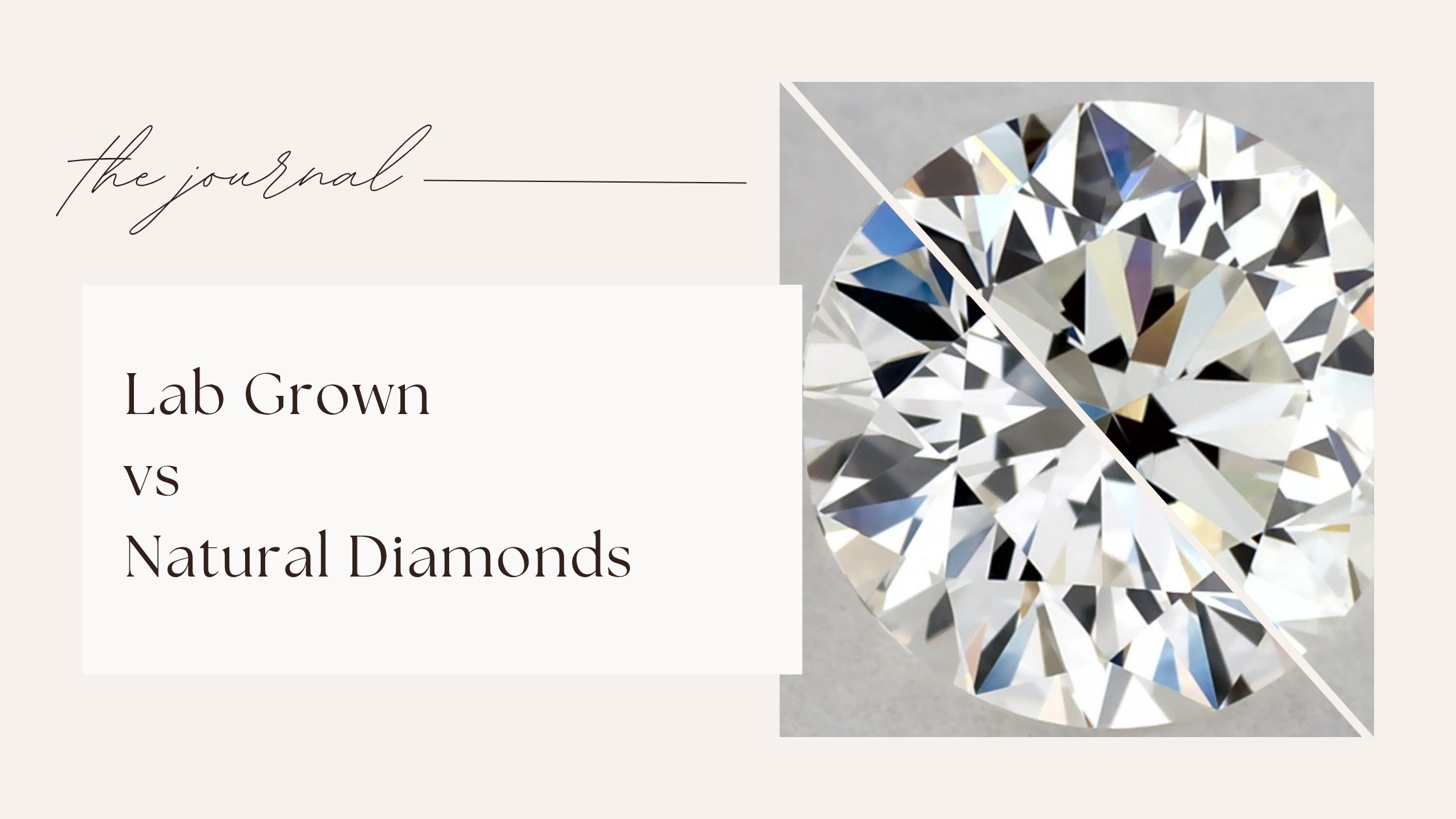
The internet has turned lab grown vs natural diamonds into a full blown identify war.
A moral debate.
A status debate.
A financial debate.
An identity debate.
And somewhere in the middle of all that noise, people trying to buy an engagement ring are left wondering:
“What am I actually supposed to do?”
Because depending on who you ask:
Lab grown diamonds are either the smartest thing ever created. Or fake stones ruining the industry.
Natural diamonds are either timeless and meaningful. Or overpriced scams built on marketing.
And most of those extreme opinions are far more emotional than factual.
Honestly, most of the conversation completely misses the real issue anyway.
Because the best choice is not about which diamond strangers on the internet approve of.
It’s about understanding which tradeoffs matter to YOU.
Are lab grown diamonds better than natural diamonds?
Neither lab grown nor natural diamonds are automatically “better.”
The right choice depends on your priorities, budget, values, expectations, and long term goals for the ring.
Lab grown and natural diamonds both have advantages, disadvantages, and tradeoffs that should be evaluated individually.
First: Lab Grown Diamonds Are Real Diamonds
Let’s clear up the biggest misconception immediately.
Lab grown diamonds are real diamonds.
Chemically.
Physically.
Visually.
They are not cubic zirconia. They are not moissanite. They are not “fake” stones.
A lab diamond is still a diamond.
The difference is origin.
One formed naturally underground over billions of years. The other was grown in a controlled environment using advanced technology.
But while the chemistry is the same, the tradeoffs surrounding them are not.
And this is where people start getting confused.
Because many buyers assume that if lab and natural diamonds are both “real,” they must therefore be interchangeable in every way that matters.
They’re not.
And that’s where the real conversation begins.
The Real Difference Isn’t Appearance. It’s Tradeoffs.
This is where most people get trapped.
They keep searching for the universally “correct” answer instead of asking the better question:
“What matters most to me?”
Most people already know what matters to them.
The problem is they stop listening to themselves once the internet starts yelling at them.
Because the reality is:
Different priorities lead to different correct decisions.
For some people, the priority is maximizing size while staying within budget.
For others, the priority is rarity, natural origin, or traditional symbolism.
For some, resale and future upgrade potential matters. For others, it doesn’t matter at all.
None of those priorities are wrong. But they are different.
The problem starts when people stop making decisions based on their own priorities and start making them based on internet narratives, judgement, or emotional pressure.
What’s the biggest difference between lab grown and natural diamonds?
The biggest differences are:
Origin
Rarity
Price structure
Long term resale potential
And the emotional meaning people personally attach to them
Visually, lab grown and natural diamonds can look identical.
Why The Lab Grown vs Natural Debate Became So Emotionally Charged
This conversation used to be much simpler.
Then lab grown diamonds entered the mainstream market and changed the industry extremely quickly.
At first, the narrative around lab diamonds was heavily on:
Lower prices
Ethical sourcing
Environmental concerns
Accessibility
And because lab grown diamonds are chemically identical to natural diamonds, many consumers naturally started asking:
“If they look the same, why would I spend more on a mined diamond?”
That question created tension inside the industry very quickly.
Over time, the conversation stopped being about diamonds and started becoming about identity and values.
Now the internet often frames the decision like this:
“If you buy lab, you’re smarter and more ethical.”
OR
“If you buy natural, you’re buying something real and meaningful.”
That’s where things started getting distorted.
Because both sides became less about helping buyers make informed decisions and more about defending personal choices.
Once someone emotionally commits to their decision, they usually start defending it instead of evaluating it objectively.
That’s human nature.
But it also creates a lot of misinformation and tension.
What People Get Wrong About Lab Grown Diamonds
There are several major misconceptions surrounding lab grown diamonds right now.
“Lab grown diamonds are fake”
They aren’t.
This idea comes from emotional resistance to the fact that labs disrupted the traditional diamond industry.
But scientifically, lab diamonds are absolutely real diamonds.
“Lab grown diamonds are all perfect”
This one is becoming increasingly common online.
A lot of people now believe you don’t need to worry about the 4Cs with lab diamonds because they’re supposedly all high quality.
That’s simply not true.
Lab grown diamonds still vary in:
Cut quality
Colour
Clarity
Transparency
Overall visual performance
And there are additional considerations with labs as well, including:
Growth type
Post-growth treatment
Potential colour tints or grey hues
A lab grown diamond can absolutely still be poorly cut or visually disappointing.
The idea that all labs are automatically perfect creates a false sense of confidence for buyers.
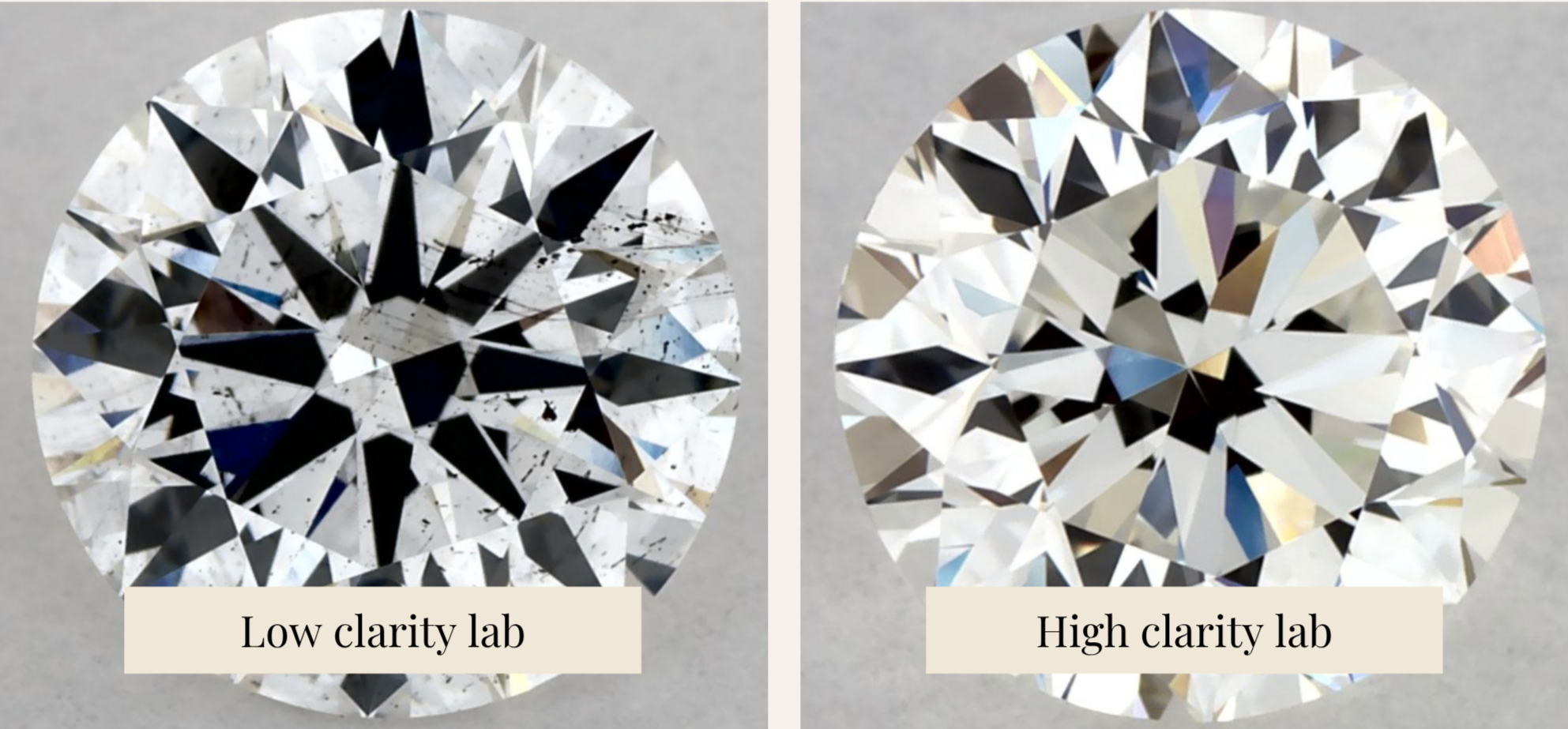
Lab grown diamonds still vary significantly in quality and appearance.
“Lab grown diamonds are always the smarter financial decision”
This depends entirely on what someone values.
If the priority is maximizing visual size for a lower upfront cost, then yes, labs can make enormous sense.
But if long term resale or future upgrade potential matters, that conversation changes significantly.
Most lab grown diamonds currently have little to no resale value. And most jewellers don’t offer meaningful trade-in programs on labs.
Buyers deserve to understand the tradeoff clearly BEFORE they emotionally attach to the ring.
What People Get Wrong About Natural Diamonds
Natural diamonds also come with a lot of misconceptions.
“Natural diamonds hold their value well”
Most don’t.
With the exception of exceptionally rare stones, most natural diamonds lose significant value after purchase, similar to buying a new car.
A diamond is only worth what someone else is willing to pay for it.
That’s important to understand because a lot of buyers approach natural diamonds like investments when they really shouldn’t.
An engagement ring is first and foremost an emotional purchase.
Not a retirement strategy.
“Natural diamonds are morally superior”
This is another oversimplified internet narrative.
The reality is much more nuanced than people want it to be.
Some buyers choose natural because they value rarity, geological origin, or traditional symbolism. Not because they’re trying to make a moral statement.
And many buyers choosing labs aren’t doing it because they think natural diamonds are unethical. They simply prefer the financial flexibility or size potential lab grown diamonds offer.
Reducing the entire conversation to “ethical vs unethical” ignores how personal and layered these decisions actually are.
“Natural automatically means better”
Not necessarily.
A poorly chosen natural diamond is still a poorly chosen diamond.
I’ve actually seen people intentionally lower quality standards just so they could say they bought a natural diamond instead of a lab.
That’s backwards.
Visual beauty still matters.
No matter which direction you go, you should still care about:
Cut quality
Overall appearance
Transparency
Light performance
Craftsmanship
Buying a natural diamond does not automatically guarantee a better outcome.
Where People Actually Get Trapped
This is where I think the industry conversation has become genuinely unhealthy.
People are no longer just choosing diamonds.
They’re choosing identities.
And that creates pressure from both directions.
I’ve seen people buy natural diamonds because they were afraid others would judge them for choosing a lab.
And I’ve seen people buy labs because they were afraid they’d seem financially irresponsible for buying natural.
That’s not a healthy decision making process.
I’ve also seen the market become increasingly distorted around size expectations.
Social media has dramatically shifted what people now consider “normal” for engagement rings.
A few years ago, a 1.00ct engagement ring was very normal. Then it became 2.00ct. Now massive 5.00-7.00ct lab grown diamonds are becoming increasingly common online.
The internet has normalized sizes that would have once been considered exceptionally rare or unattainable for most people.
And that repeated exposure changes perception.
Suddenly perfectly beautiful, well balanced rings start feeling “small” simply because social media shifted the baseline.
That’s not reality.
That’s consumer psychology.

Social media has dramatically shifted expectations around diamond size.
What Actually Matters When Choosing Between Lab Grown and Natural Diamonds?
This is the part I wish more people focused on.
Not: “What’s better?”
But: “What priorities matter most to me?”
Because that’s where the real answer lives.
If Your Priority is Maximizing Size For Budget
Lab grown diamonds often make a lot of sense.
You can typically get significantly more size for the same budget compared to natural.
If Your Priority is Rarity or Natural Origin
Natural diamonds often make more sense emotionally.
For some people, the fact that the diamond formed naturally over billions of years genuinely matters to them. And that’s completely valid.
If Future Upgrade Potential Matters
Natural diamonds are usually the better option.
Most trade-in and upgrade programs today still revolve around natural diamonds.
If Your Priority is Visual Beauty
Both can be beautiful.
But regardless of which direction you choose, quality evaluation still matters enormously.
Cut quality.
Transparency.
Light performance.
Overall appearance.
Those things matter far more than internet arguments.
The Industry Incentives Matter Too
This is another part buyers should understand.
The diamond industry is still adjusting to the existence of lab grown diamonds.
Natural diamonds traditionally carried very large margins.
Lab diamond pricing has dropped dramatically over time because supply continues increasing rapidly.
That changes incentives. And once buyers understand that incentives shape narratives, a lot of the industry noise suddenly starts making more sense.
Some businesses strongly push labs. Some strongly push natural.
And often, the strongest opinions come from whichever option benefits that business model more.
That’s why independent guidance matters so much in this conversation.
Because this decision should not be about defending an industry narrative.
It should be about helping YOU make the right decision for your priorities.
There Is No Universally “Correct” Choice
This is probably the most important thing I can say in this entire article.
There is no universally superior diamond.
Only:
The right choice for your priorities
Your budget
Your values
Your expectations
And your long term goals
A lab grown diamond is not automatically “cheap.”
A natural diamond is not automatically “a scam.”
A natural diamond is not automatically “better.”
A lab grown diamond is not automatically “smarter.”
Most people are trying way too hard to figure out which side is objectively correct.
When the better question is simply:
“What matters most to me?”
Before You Decide, Understand The Tradeoffs Clearly
The people who feel best about their decision are usually not the ones who followed the loudest opinion online.
They’re the ones who actually understood the tradeoffs before buying.
Because confidence doesn’t come from winning an internet debate.
It comes from clarity.
If you’re currently trying to decide between a lab grown and natural diamond and want help understanding what makes the most sense for your priorities, explore Engagement Ring Guidance or request a private consultation.
Sometimes the smartest thing you can do is stop trying to find the universally “right” answer and start figuring out the right answer for YOU.
Not sure which priorities actually matter to you yet?
This isn’t about picking a side in an internet debate. Answer 6 quick questions and get a starting point built around what matters to YOU, not a comment section.
About the Author
Robyn Bell-Wong is a Calgary-based Independent Jewellery Advisor and Consultant specializing in engagement rings, diamonds, and meaningful fine jewellery purchases.
With over 20 years of experience in service, 5 years at the top of a fine jewellery house, 300+ clients guided, and a GIA Applied Jewelry Professional designation, she provides private, buyer-side guidance to clients making high value jewellery decisions across Canada and the U.S.
Unlike traditional jewellery retail environments, Robyn does not sell jewellery or work on commission. Her role is to act solely in her client’s best interest. Offering clear, objective guidance on quality, value, and design so clients can make confident, well-informed decisions.
Through Refined by Robyn, she supports clients with engagement ring guidance, independent ring reviews, and private jewellery consulting for meaningful purchases.
Her work focuses on helping clients avoid costly mistakes, navigate overwhelming options, and choose jewellery that truly reflects their intention, style, and budget.
Request a private consultation
Follow on Instagram @refined.by.robyn