

Most people buying an engagement ring spend the majority of their time, energy, and budget thinking about the diamond.
This makes sense.
The diamond is the centrepiece.
It’s what gets evaluated, compared, and agonized over.
But here’s something I wish more people understood before they made a decision:
The setting is not just a holder for the diamond.
It’s half the ring.
And it’s often the half that gets the least amount of attention.
Why does the engagement ring setting matter?
The setting determines how the ring wears over time, how secure the diamond is, and whether the ring holds up to everyday life.
A poor quality setting can warp, weaken, or fail (sometimes within months of purchase), regardless of how good the diamond is.
Choosing the right setting is just as important as choosing the right stone.
What I’ve Actually Seen
I want to start here, because this isn’t theoretical.
I’ve had women come to me wearing rings they’ve owned for two weeks.
Two weeks.
And the band is already warped.
Or the head (the part that holds the diamond) has nearly broken off the ring entirely.
I’ve seen prongs so poorly constructed that they needed complete retipping after just a couple of years of normal wear.
That is not normal.
Prong retipping is a maintenance reality for any ring over time. But needing extensive retipping within two years isn’t wear and tear.
It’s a construction problem.
And I’ve experienced it myself. Rings where you continuously lose accent stones because the craftsmanship simply wasn’t there to keep them secure.
None of these were cheap rings.
None of these buyers made careless decisions.
They just didn’t know what to look for.
And nobody told them.
The Transparency Problem Most Buyers Don’t Know Exists
Here’s the part that frustrates me the most.
A lot of people assume that buying from a reputable retailer means the ring was made well.
But that’s not how the jewellery industry works.
Most retailers, both online and in-store, source their settings from the same pool of mass-produced manufacturers and wholesalers.
The same setting can show up with ten different names attached to it.
And the conversation about where that setting actually comes from, who made it, what quality standards it was held to, how the metal was finished, how the prongs were formed?
That conversation rarely happens.
Not always because someone is deliberately being dishonest.
But because it’s simply not the norm to have it.
Which means buyers are making decisions without information they genuinely deserve to have.
Are engagement rings from retailers made well?
It varies significantly, and most buyers don’t have an easy way to tell.
Many retailers, both online and in physical stores, source settings from the same mass-produced manufacturers.
The brand or store name doesn’t automatically reflect the quality of construction.
Asking specific questions about where the setting is made, how the prongs are formed, and what the band thickness is can reveal a lot about what you’re actually buying.
The Styles Most Likely to Create Problems
This is where I’ll be direct, because I think buyers deserve honesty over politeness.
Some of the most popular engagement ring styles right now are also some of the most structurally vulnerable.
Hidden Halos
Hidden halos look stunning in photos.
They’re one of my favourite styles, and I’ve helped hundreds of clients create them.
My ring doesn’t have a hidden halo.
The ring of small diamonds tucked underneath the centre stone adds sparkle from angles that feel unexpected and romantic.
But those accent stones sit in an area of the ring that takes a lot of wear.
The underside of the head is constantly making contact with surfaces.
And if the craftsmanship isn’t there, those small stones are the first to go.
Once they start loosening or falling out, the repair process is often expensive, and ongoing.
Very Slim Solitaires
A sleek, minimal solitaire is a beautiful choice.
But there’s a meaningful difference between a slim band that’s well constructed and a slim band that’s simply thin.
Below a certain width and thickness, a band doesn’t have enough metal to maintain its shape under everyday wear.
Bending, distortion, and pressure become much more likely.
If you love the minimal look, it’s absolutely achievable.
The question to ask is whether the band has been designed to be slim but structurally sound, or if it’s just made cheap.
Prong Settings With Too Little Metal
Prongs are the claws that hold your diamond in place.
And they need enough metal to actually do that job reliably.
I’ve seen settings with prongs so small, or so poorly formed, that the diamond was never truly secure from the day it was set.
You won’t necessarily know by looking at it.
But over time, you’ll know because stones start moving, or worse, disappearing. A lot.
For a centre stone, this is an obvious problem.
For accent stones along a band or halo, it’s one of the most common quiet failures I see.
What to Actually Look For Before You Buy
Ask About Band Thickness and Width
This is a question most buyers never think to ask, but it tells you a lot.
A band that looks delicate can still be structurally sound if the metal depth is appropriate.
Ask specifically:
What is the width and thickness of the band at its narrowest point?
Structurally there’s a significant difference between a 1.50mm band and a 1.75mm band.
If the retailer can’t or won’t answer that clearly, take note.
Ask Where the Setting Is Made
You deserve to know this.
Is it cast in house?
Is it sourced from a manufacturer?
What quality standards does that manufacturer work to?
You may not always get a detailed answer.
But asking the question tells you something either way.
Look at How the Prongs Are Finished
In video or in person, look at the prongs closely.
Are they even?
Do they sit flush and secure against the diamond?
Do they look substantial enough to actually hold the stone, or do they look like they were formed as an afterthought?
And if it’s an online photo or video:
Is it a real ring you’re looking at? Or a generated image?
Think About How She Actually Wears Jewellery
Some people are gentle with their hands.
Others are hands on constantly:
active work
gym
cooking
outdoor activities
The right setting for someone who rarely takes their ring off is different from the right setting for someone with a more relaxed relationship with jewellery.
An honest assessment of lifestyle matters just as much as aesthetic preference.
Is a thin band bad for an engagement ring?
A thin band isn’t automatically bad, but it requires higher quality construction to hold up over time.
The risk isn’t the aesthetic. It’s whether enough metal is present to maintain the ring’s shape under everyday wear for that specific person.
A well made thin band can last a lifetime. A poorly made one can warp within months.
Beautiful and Durable Are Not Opposites
I want to be clear about something.
None of this means you have to choose a boring ring to get a well made one.
The most elegant, refined rings I’ve ever seen were also exceptionally well built.
Good construction doesn’t mean chunky or traditional.
It means whoever made the ring cared as much about how it would hold up as how it would look.
That combination exists.
It just requires knowing what to look for, and sometimes asking questions that don’t come up naturally in a sales conversation.

Thin and well constructed aren’t always the same thing.
The Part Most People Only Realize After
The diamond is what you see when you look at a ring.
But the setting is what determines whether that ring still looks the same in five years.
And the gap between a well made ring and a poorly made one is almost never obvious at the point of purchase.
It shows up later.
In a band that doesn’t sit quite right anymore.
In prongs that always catch on fabric.
In a stone that moves when it shouldn’t.
In a repair bill you weren’t expecting.
Most buyers who end up here didn’t make a careless choice.
They just didn’t know the setting deserved the same scrutiny as the diamond.
This Is Part of What Independent Guidance Is For
When I work with my clients, the setting conversation happens alongside the diamond conversation.
Not after it.
Because how a ring is built matters just as much as what’s in it.
If you’re currently looking at rings and want an honest assessment of both the diamond and the setting before you commit, book a Ring Review or request Engagement Ring Guidance.
Because the goal isn’t just finding a beautiful ring.
It’s finding one that still beautiful a decade from now.
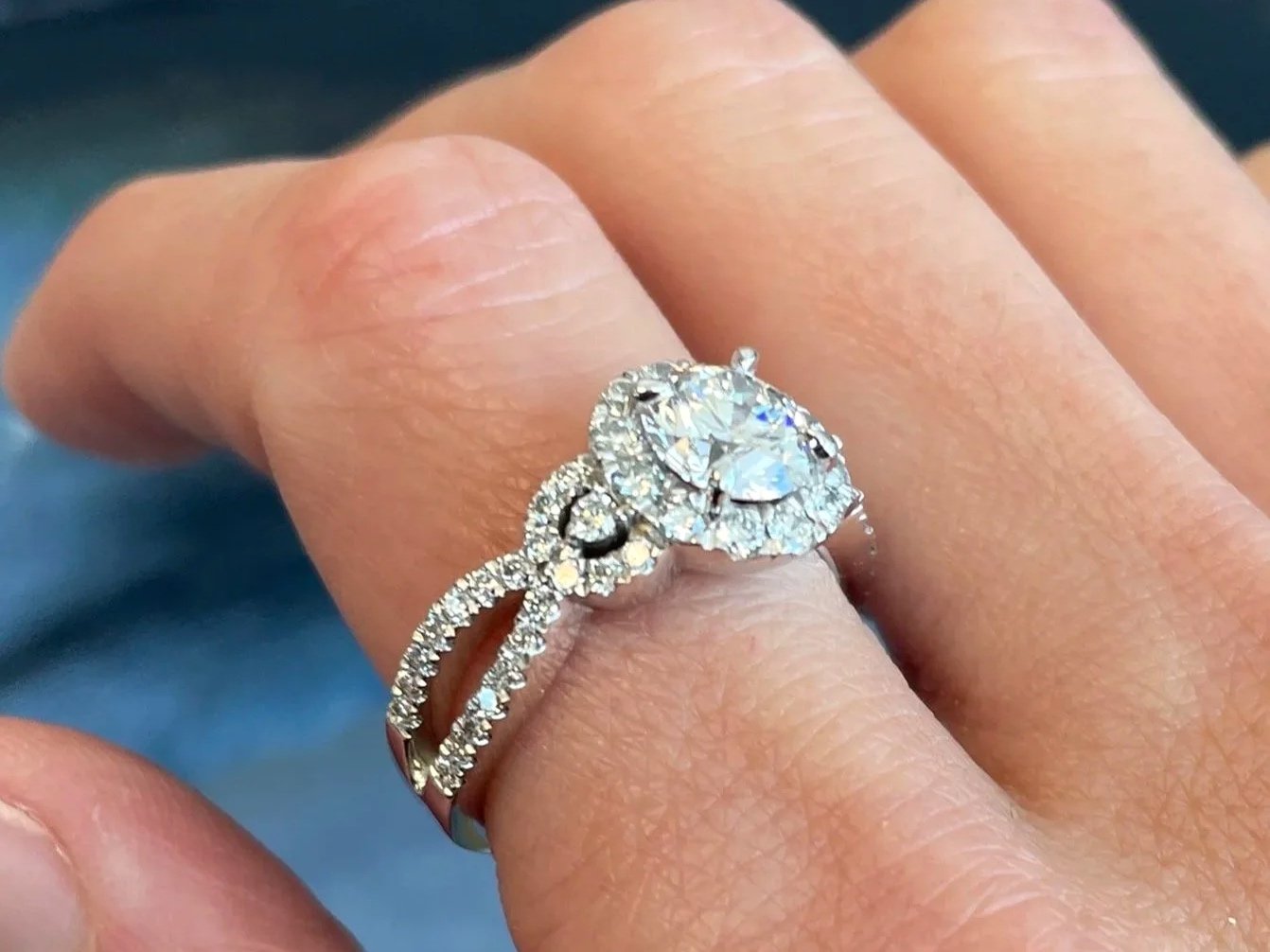
The right ring looks as good in ten years as it does today.
Focused on the diamond and haven’t thought about the setting yet?
Grab the free guide: 5 things to ask before you buy, so the ring holds up as well as the stone does.
About the Author
Robyn Bell-Wong is a Calgary-based Independent Jewellery Advisor and Consultant specializing in engagement rings, diamonds, and meaningful fine jewellery purchases.
With over 20 years of experience in service, 5 years at the top of a fine jewellery house, 300+ clients guided, and a GIA Applied Jewelry Professional designation, she provides private, buyer-side guidance to clients making high value jewellery decisions across Canada and the U.S.
Unlike traditional jewellery retail environments, Robyn does not sell jewellery or work on commission. Her role is to act solely in her client’s best interest. Offering clear, objective guidance on quality, value, and design so clients can make confident, well-informed decisions.
Through Refined by Robyn, she supports clients with engagement ring guidance, independent ring reviews, and private jewellery consulting for meaningful purchases.
Her work focuses on helping clients avoid costly mistakes, navigate overwhelming options, and choose jewellery that truly reflects their intention, style, and budget.
Request a private consultation
Follow on Instagram @refined.by.robyn