
Naturals or Indented Naturals: The Clarity Characteristic Nobody Explains Properly
You’re looking at a diamond grading report.
Everything looks great.
Then you see it: “natural” or “indented natural” listed as a clarity characteristic.
You Google it.
Reddit tells you it’s a red flag.
A forum thread tells you it can chip.
Now you’re wondering if the diamond you liked is actually a problem.
Here’s the thing. Both “it’s dangerous” and “it’s totally fine, don’t worry about it” aren’t the full answer. The real answer depends on one detail almost nobody brings up, and it’s not something you’ll find explained clearly anywhere online.
What is a natural on a diamond?
A natural is a small, unpolished patch of the diamond’s original rough surface, usually left at the girdle because removing it would cost too much carat weight.
It’s not damage.
It’s not a crack.
It’s untouched original diamond surface that the cutter chose to leave rather than polish away.
What is an indented natural on a diamond?
It’s the same thing as a natural, except it dips slightly below the polished surface instead of sitting flush.
Still original rough surface.
Not a fracture.
Not a piece that can come loose the way a chip can.
The Internet Gets This Wrong in Both Directions
Most consumer content lumps “natural” and “indented natural” in with genuinely serious clarity characteristics like chips and cavities, and treats them as automatically scary.
That’s not accurate.
Gemologically, a plain natural or indented natural is generally considered low risk and mostly cosmetic. It’s original crystal surface, not a break in the diamond, so it doesn’t inherently create the same kind of structural weak point that an actual chip or crack does.
Does a natural or indented natural affect a diamond’s durability?
On its own, usually not. It’s untouched rough diamond surface, not a fracture. Most of the time, it’s cosmetic, not structural.
But “it’s just cosmetic, don’t worry about it” (the advice you’ll get most places) isn’t the full picture either. And this is where the real answer actually lives.
Placement Changes Everything
This is the detail that doesn’t show up in general explanations, but matters enormously in practice. And it comes from the people actually handling the stone, not the grading report.
In my experience, and in conversations with the diamond setters I work with, a natural or indented natural located along the girdle is treated as a red flag regardless of the general “usually cosmetic” rule.
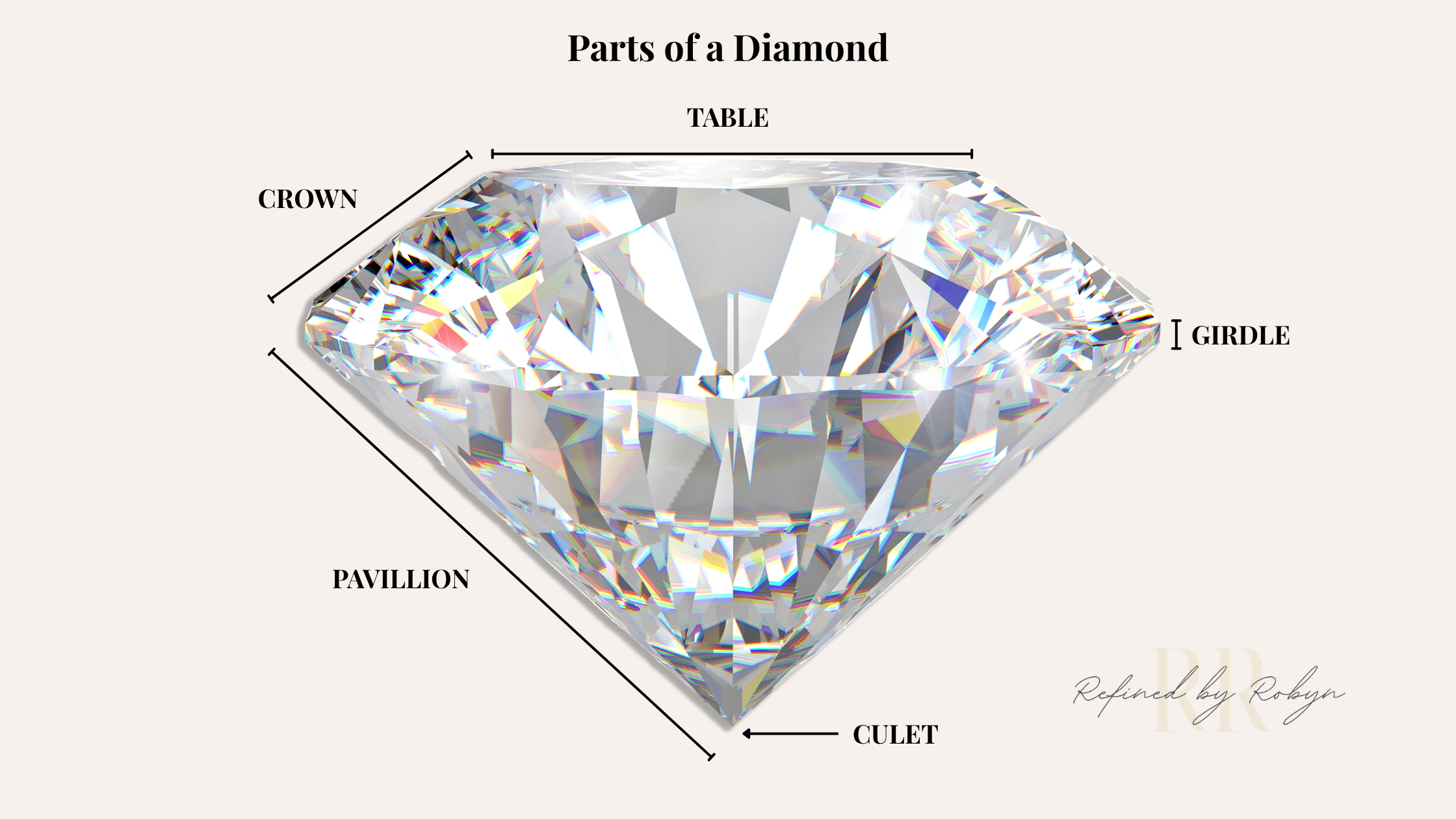
The girdle is the outermost edge or diameter of the diamond and used to secure the stone in a ring setting.
Any pre-existing characteristic sitting right at that edge is the one place setters are least willing to take a risk on, even when the characteristic itself is technically low risk on its own.
I’ve seen setters decline to set a stone with a girdle area natural or indented natural altogether, specifically because they don’t want to be held responsible if it chips or cracks during setting. That’s not a theoretical concern. It’s a liability call setters make in real time, on real diamonds, and it’s not something a grading report or a general internet explainer is going to tell you.
So the size and specific placement matter more than the label on the grading report. A natural away from the girdle is a very different situation than one sitting directly on it. And nothing on the certificate tells you which one you’re looking at without actually checking.
What Actually Causes Diamonds to Chip
If you want to know what genuinely creates risk, here it is:
Feathers that reach the surface, especially at the girdle or corner
Feathers that cross through the girdle from crown to pavilion, creating an internal weak plane
Cavities, especially on the girdle or crown
Chips: Existing damage, which should always be avoided
Extremely thin girdles
Sharp, pointed corners on fancy shapes
These create genuine structural weak points in a diamond.
A plain natural away from the girdle usually doesn’t belong on this list, but one sitting on the girdle deserves the same scrutiny as everything above. Even though it isn’t technically a fracture.
What is the most common cause of a diamond chipping?
Diamonds are extremely hard, but their toughness (resistance to breaking or chipping) is uneven because they have cleavage planes where the structure is less tightly bonded. A hard impact at the exact spot of a surface reaching inclusion, thin girdle, or unprotected corner is the most common way a diamond actually chips.
The Shape Risk Nobody Connects to Clarity: Princess Cuts
Sharp corners are a separate risk factor entirely from clarity characteristics, and princess cuts are the clearest example.
I’ve seen this pattern repeatedly:
Princess cut diamonds turning up on the secondary and resale market with visibly damaged corners.
It’s common enough that you’ll sometimes see princess cuts advertised with “cut corners,” meaning the diamond was deliberately recut to round off a corner that had already chipped.
This isn’t a rare, freak occurrence. It’s a known enough pattern in the shape that it’s worth asking about directly if you’re set on buying a princess cut diamond.
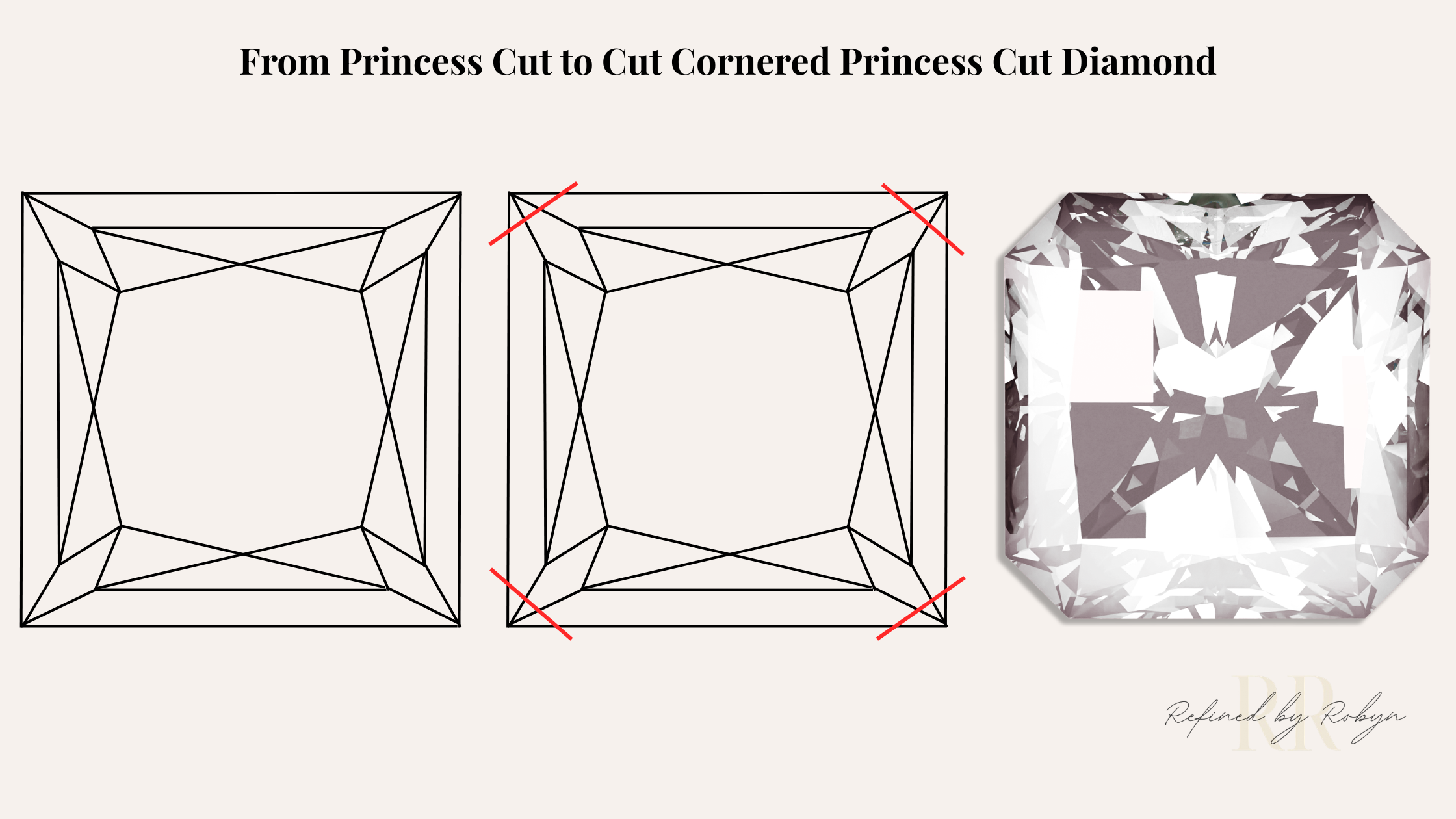
Princess cut diamond corners are a known weak point in the trade. Once a princess cut loses its corner, they’re typically resold as “cut cornered” on the market.
The certificate tells you what something is. It doesn’t tell you how it looks.
The Fix Is In the Setting, Not the Diamond
This is where craftsmanship, not the diamond itself, is what’s actually protecting your investment.
For princess cuts and other pointed shapes, V-prongs (prongs shaped to wrap around and protect a corner, instead of a standard straight prong) are the industry standard. A standard prong on its own often isn’t enough to protect a sharp corner from everyday impact.
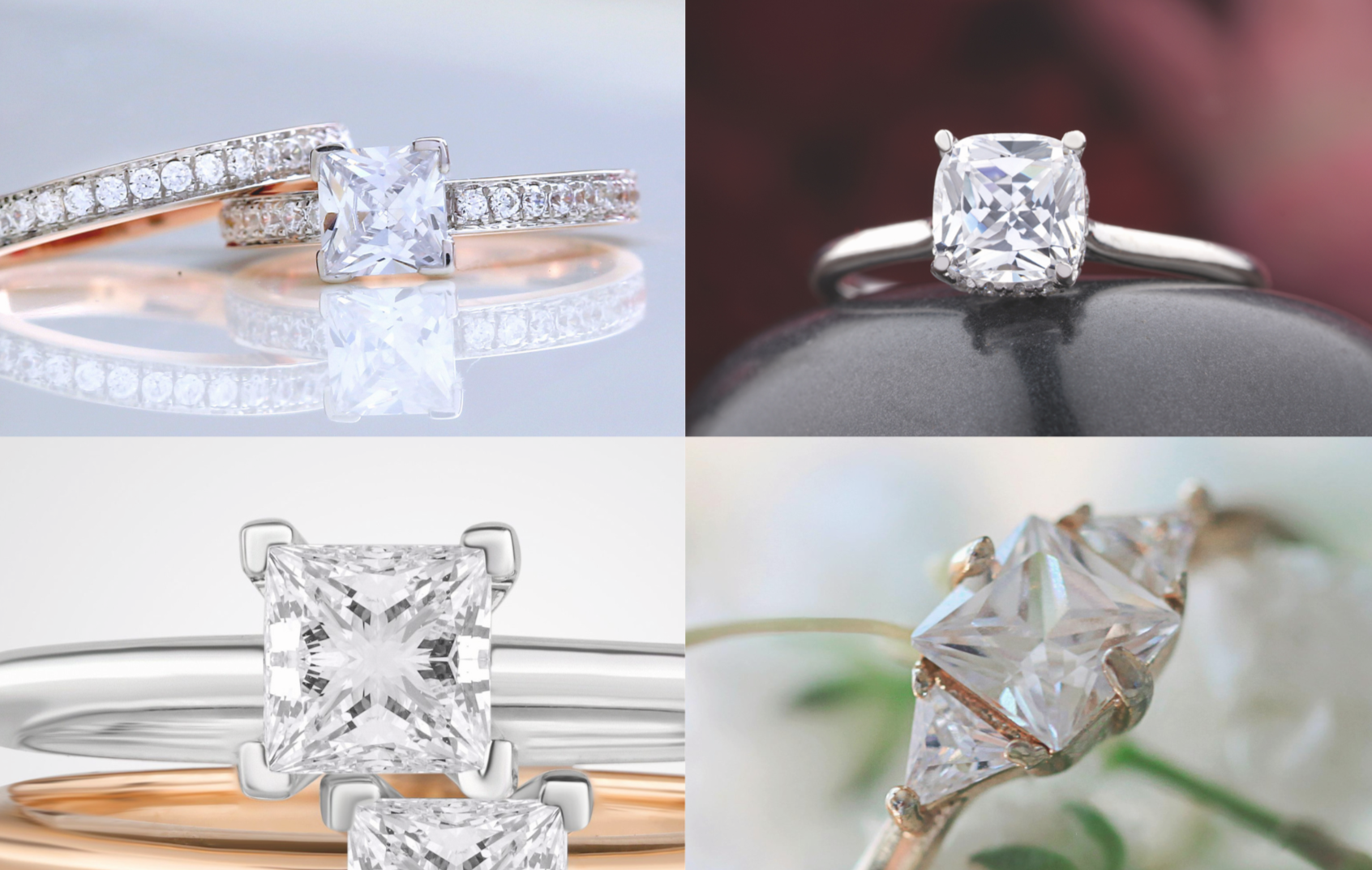
V prongs (left) are the industry standard to protect princess cut diamonds, vs standard straight prongs or other delicate settings (right).
A skilled setter can also position a diamond so that a vulnerable characteristic, like a feather near the girdle, sits directly under a prong instead of exposed at an edge. This is exactly why the ring’s construction matters as much as the diamond’s specs.
Do princess cut diamonds need special prongs?
Generally, yes. V prongs at each corner of the diamond are the standard recommendation for princess cuts and other pointed fancy shapes, specifically because a standard prong doesn’t fully protect the point from chipping.
So What Does This Actually Mean For You?
A natural or indented natural on a diamond grading report doesn’t automatically mean you should walk away from it. But blanket reassurance that “it’s just cosmetic” isn’t the full story either.
Placement is what actually determines the risk, and a girdle area natural deserves the same level of scrutiny as a more obviously serious characteristic.
The same logic applies to shape. A sharp cornered fancy shape carries a real, well documented risk that has nothing to do with clarity at all, and everything to do with how it’s set.
A diamond’s grading report tells you what a characteristic is and roughly where it sits. It doesn’t tell you whether that placement is actually a problem for your specific stone, and that’s not something the report was ever designed to answer.
Not Sure If a Characteristic on Your Diamond Is Actually a Concern?
If you’re looking at a diamond and want a clear answer on whether a natural, indented natural, or anything else on the report is actually something to worry about, I offer a quick diamond review where I go through it and tell you exactly what you’re looking at.
If you’re earlier in the process and want full 1:1 support sourcing the right diamond, explore Engagement Ring Guidance.
Or grab the free guide: 5 things to ask before you buy, so you know what’s actually worth worrying about and what isn’t.
About the Author
Robyn Bell-Wong is a Calgary-based Independent Jewellery Advisor and Consultant specializing in engagement rings, diamonds, and meaningful fine jewellery purchases.
With over 20 years of experience in service, 5 years at the top of a fine jewellery house, 300+ clients guided, and a GIA Applied Jewelry Professional designation, she provides private, buyer-side guidance to clients making high value jewellery decisions across Canada and the U.S.
Unlike traditional jewellery retail environments, Robyn does not sell jewellery or work on commission. Her role is to act solely in her client’s best interest. Offering clear, objective guidance on quality, value, and design so clients can make confident, well-informed decisions.
Through Refined by Robyn, she supports clients with engagement ring guidance, independent ring reviews, and private jewellery consulting for meaningful purchases.
Her work focuses on helping clients avoid costly mistakes, navigate overwhelming options, and choose jewellery that truly reflects their intention, style, and budget.
Request a private consultation
Follow on Instagram @refined.by.robyn