
Fluorescence: The Diamond “Flaw” That’s Actually a 50 Year Old Pricing Habit
You’ve narrowed things down and found a diamond you’re thinking of buying.
You like the specs.
You like the price.
Then someone mentions “fluorescence” in the conversation, and now you’re second guessing a diamond you were sold on five minutes ago.
This happens constantly because almost everything online says the same thing:
“Avoid fluorescence.”
No nuance, no context, just a rule.
That rule isn’t random. It came from somewhere real. But it’s also decades out of date for the vast majority of diamonds it gets applied to, and still quietly costing buyers money in both directions. Some people get talked out of great diamonds. Others pay a premium to avoid something that would’ve never been visible in the first place.
So let’s actually get into where this rule came from, and where it still holds up.
What is diamond fluorescence?
Fluorescence is a glow some diamonds give off when exposed to ultraviolet light, caused by trace elements reacting to that light.
It’s graded None, Faint, Medium, Strong, or Very Strong, and it shows up on a diamond grading report. But it’s not one of the 4Cs. It’s an identifying characteristic, not a quality grade.
Roughly a quarter to a third of diamonds show some degree of fluorescence. About 95% of those glow blue.
Here’s Where “Avoid Fluorescence” Actually Came From
This isn’t an old wives’ tale with no origin. It’s a pricing habit with a real history. And once you know it, the blanket advice stops making sense.
Decades ago, strong blue fluorescence in a high colour diamond wasn’t something buyers avoided. It was actually something they paid extra for.
These diamonds were marketed as “blue-white,” because the glow made a high colour stone look even whiter and brighter in daylight. Diamonds from South Africa’s Premier mine became so associated with this look that light yellow, strongly fluorescent diamonds were nicknamed “Premier” diamonds in the trade. Similar stones from the Jagerfontein mine were called “Jager” diamonds. And both traded at a premium.
The “blue-white” label got abused so badly (dealers slapping that label on lower colour stones that had nothing to do with fluorescence) that the U.S. Federal Trade Commission banned the term in 1938 for anything other than actual blue diamonds. That’s part of what pushed the diamond industry toward the standardized grading system you rely on today.
The turn against fluorescence came later, in the investment boom of the 1970s. Buyers who’d bought high colour, strongly fluorescent diamonds as a hedge against inflation tried to resell them and got hit with steep discounts. Dealers were calling these diamonds “milky Ds” (D colour diamonds with strong blue fluorescence and reduced transparency).
That negative reputation spread.
And it’s spread well past the specific diamonds that caused the problem, moving down the colour scale and the fluorescence scale over the following decades. It was reinforced again in the early 1990s, when some labs were found to be over grading the colour of fluorescent diamonds, giving the trade a second reason to distrust it.
But the discount habit built up over 50+ years never really went away. And “fluorescence is bad” gets repeated today as a blanket rule, long after the specific problems that caused it were actually fixed.
What The Research Actually Shows (Not What Gets Repeated)
This is the part that most consumer content skips entirely, because “it depends” doesn’t make a good headline.
Fluorescence itself doesn’t cause a hazy or milky look.
The “overblue” hazy effect people are actually afraid of shows up in a very small fraction of fluorescent diamonds submitted to GIA, and it’s tied to a separate light scattering defect in the stone, not fluorescence alone.
Fluorescence has zero effect on durability. That’s a separate myth worth putting to rest too.
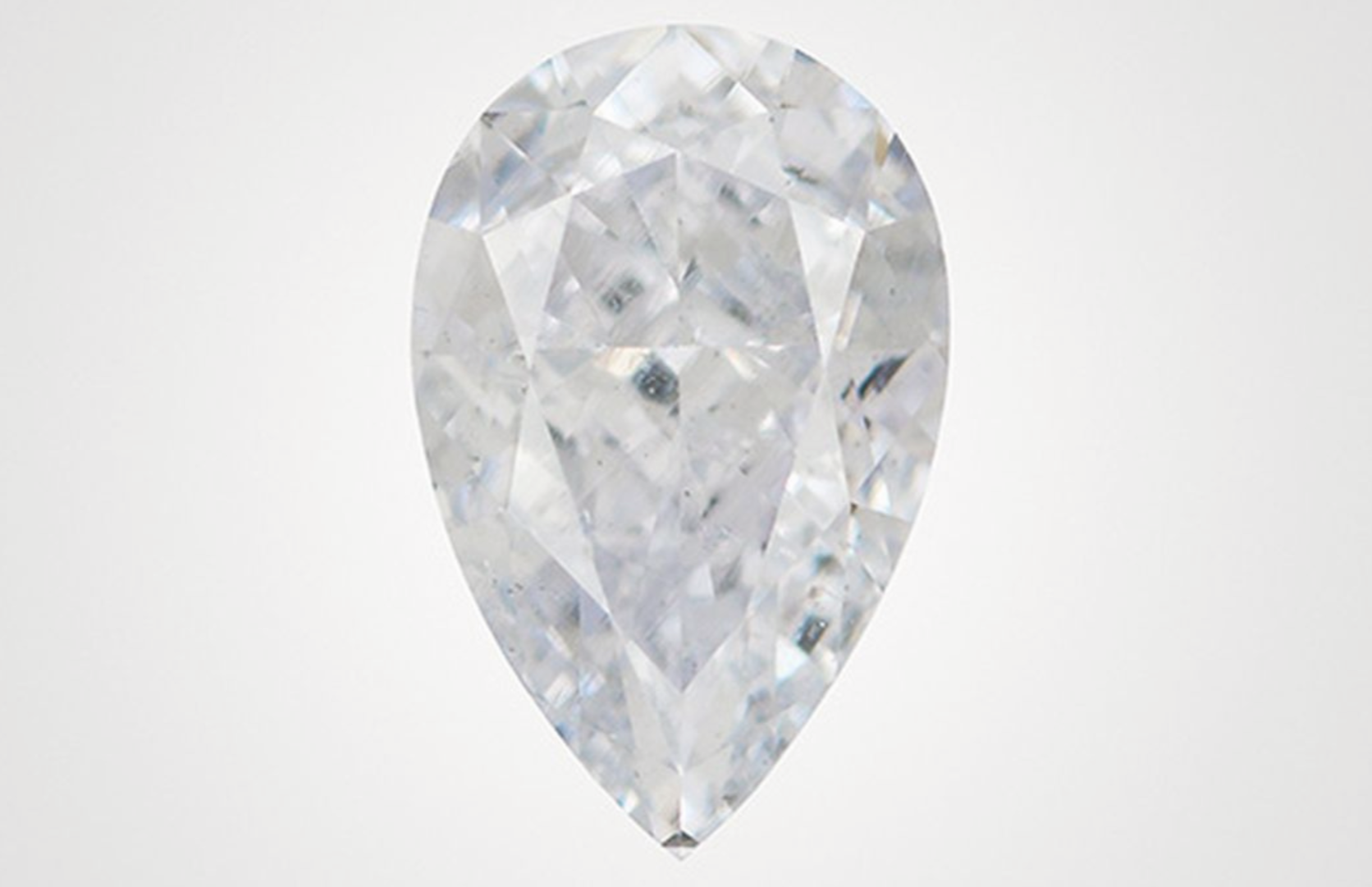
Most fluorescent diamonds never show this. The rare ones that do are why the myth exists.
Photo courtesy of: Rapaport
Does fluorescence affect how a diamond looks?
It depends entirely on the diamond’s colour grade, not on the fluorescence grade alone.
In colourless and near-colourless diamonds (D-H), strong blue fluorescence is sometimes viewed as less desirable in the trade, mainly because of that rare haze risk and because it can slightly soften the crisp sparkle buyers expect from a top colour grade diamond.
In lower colour grades, it can do the opposite, which I’ll get to below.
Where I Actually Land After Reviewing These In Person
Not the population wide research stat. What I’ve actually seen, stone by stone, with clients:
None to Faint: consistently a green flag. No hesitation.
Medium: case by case. This is the grade where it genuinely depends on the specific diamond, which is exactly why I don’t make a blanket call on it.
Strong to Very Strong: I generally steer clients away. I’ve seen the milky, hazy look often enough in person that it’s not the rare edge case the average statistic makes it sound like.
It’s worth being straight about why that last point isn’t a contradiction. GIA’s research describes the full population of graded diamonds. The stones I’m looking closely at are ones a client is already seriously considering, so it makes sense my sample surfaces this more often than a population wide average would suggest.
Both things are true at once. The statistic is accurate. The caution is still warranted when you’re evaluating one specific stone in front of you.
The Sunlight Test: What to Actually Do About It
Don’t make the call based on the word on the certificate. Look at the actual stone.
View the diamond in real natural daylight, not just indoor lighting.
Watch for any haze, cloudiness, or oily look. Especially compared to how it looks indoors.
If the look changes noticeably in the sun, that’s your answer. Move on to another stone.
A video of the diamond will usually show this more honestly than a still image.
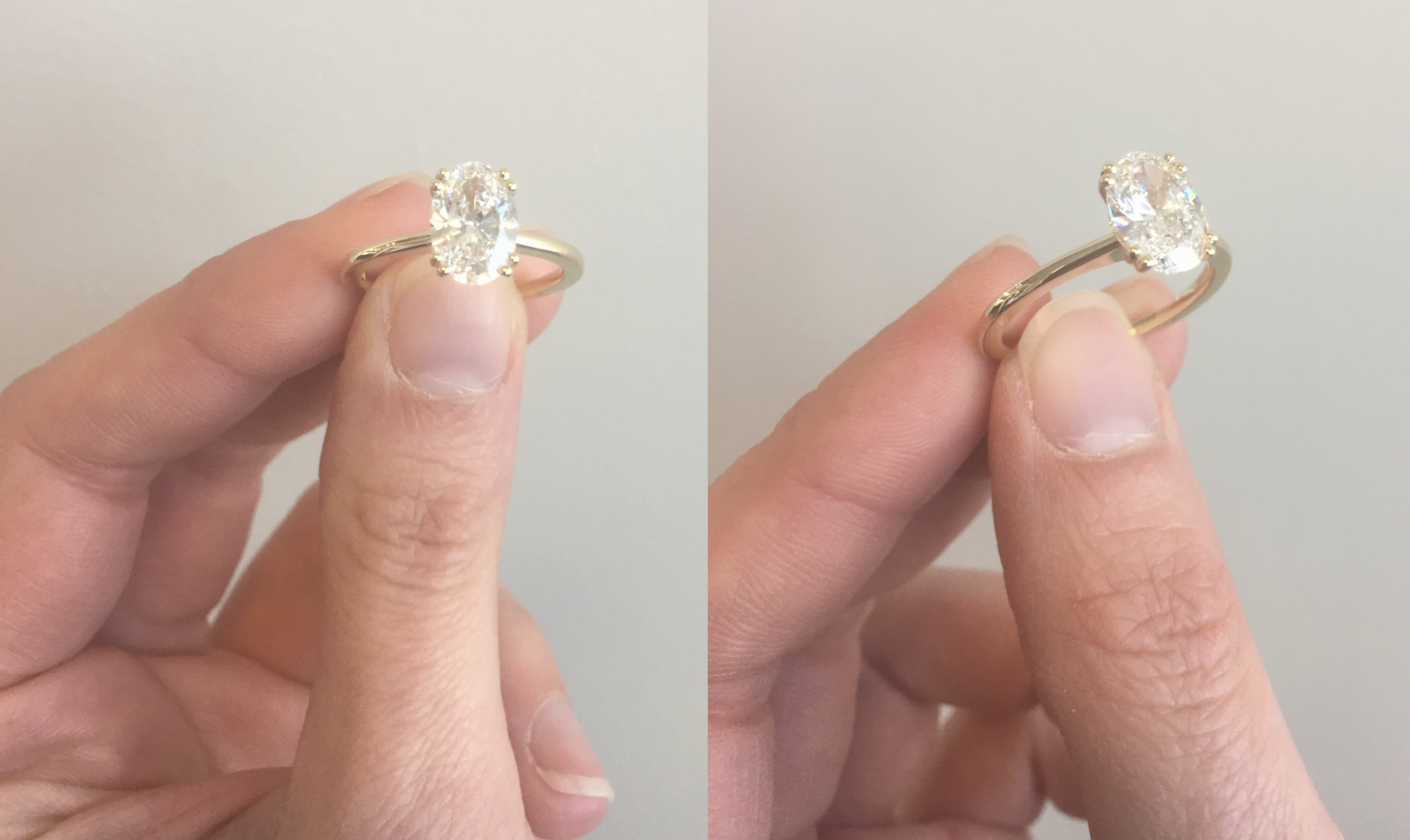
The sunlight test is the fastest way to know what you’re actually getting.
The certificate tells you what something is. It doesn’t tell you how it looks.
Where Fluorescence Can Quietly Work In Your Favour
Here’s the part the “avoid it” crowd never mentions: lower colour diamonds can actually benefit from blue fluorescence. That fluorescence can make a diamond look whiter than its colour grade suggests, because it counteracts the yellow body colour under daylight (which contains UV).
I’ve specifically seen this pay off in K-L colour diamonds (graded below what’s typically considered a “white” diamond) paired with medium fluorescence.
For someone who wants a natural diamond and is trying to be smart about budget, this combination can be a genuinely great move: a diamond that looks better than its paper grade, often for meaningfully less money.
This is the same idea behind a lot of the pricing advice I give elsewhere. Some upgrades are mostly paying for paper, and some “lower” specs create very little visible difference once you know where to look.
Can fluorescence make a diamond look better?
Yes, but in the right combination. Medium blue fluorescence in a lower colour grade (roughly K-L and below) can visually improve how white the diamond looks in daylight. This is one of the few cases where a characteristic that scares people online can actually be a smart, deliberate choice.
So Is Fluorescence Bad?
No. And it was never that simple. It depends on:
How strong the fluorescence is
What colour grade it’s paired with
What the actual stone looks like in real daylight, not what a certificate implies
“Avoid fluorescence” is a rule built for a problem from the 1970s, applied blindly to diamonds today that mostly don’t have that problem.
The only way to actually know is to look at the specific diamond, ideally with someone who’s evaluated enough of them to know exactly what they’re looking for.
Not Sure If a Diamond’s Fluorescence Is Actually a Problem?
If you’re looking at a diamond and want a straight answer on whether its fluorescence (or anything else) is something to actually worry about, I offer a quick diamond review where I go through it and tell you exactly what you’re looking at.
If you’re earlier in the process and want full 1:1 support sourcing and evaluating diamonds, explore Engagement Ring Guidance.
Second guessing a diamond because of one line on the certificate?
Grab the free guide: 5 things to ask before you buy, so a single characteristic doesn’t talk you out of (or into) the wrong engagement ring.
Helpful Next Steps
Why Good Diamonds Still Look Bad
Am I Overpaying for a Diamond? What to Check Before You Buy
How Much Should I Spend on an Engagement Ring?
About the Author
Robyn Bell-Wong is a Calgary-based Independent Jewellery Advisor and Consultant specializing in engagement rings, diamonds, and meaningful fine jewellery purchases.
With over 20 years of experience in service, 5 years at the top of a fine jewellery house, 300+ clients guided, and a GIA Applied Jewelry Professional designation, she provides private, buyer-side guidance to clients making high value jewellery decisions across Canada and the U.S.
Unlike traditional jewellery retail environments, Robyn does not sell jewellery or work on commission. Her role is to act solely in her client’s best interest. Offering clear, objective guidance on quality, value, and design so clients can make confident, well-informed decisions.
Through Refined by Robyn, she supports clients with engagement ring guidance, independent ring reviews, and private jewellery consulting for meaningful purchases.
Her work focuses on helping clients avoid costly mistakes, navigate overwhelming options, and choose jewellery that truly reflects their intention, style, and budget.
Request a private consultation
Follow on Instagram @refined.by.robyn